
Types of Retail Kiosks: A Guide for Malls and High Streets
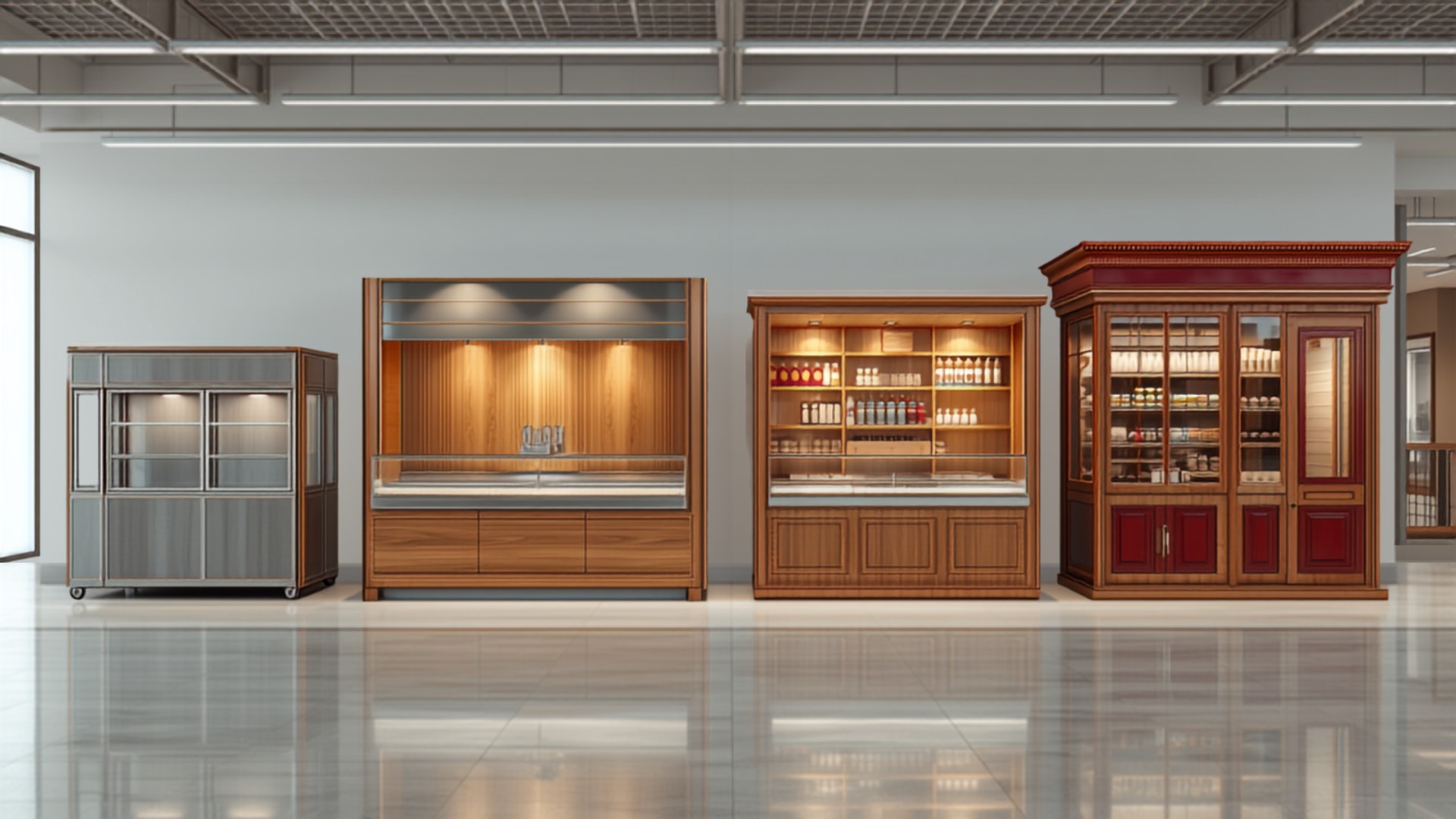
The main types of retail kiosks are mall kiosks and pop-up counters, airport and transit kiosks, high-street and market carts, and food and beverage units. These four formats split retail kiosks into broad groups, and the differences between them are not cosmetic. A mall kiosk and an airport kiosk solve completely different install problems even if they look similar in a render. This guide walks through what actually separates each format, what it changes about the build, and why picking the right one before you brief a designer saves you a redo later.
Which retail kiosk type fits which site?
| Kiosk type | Best for / where used | Notes |
|---|---|---|
| Mall kiosks and pop-up counters | High footfall indoor mall spaces | Assembled overnight; built for a short brand activation or a long-term anchor position |
| Airport and transit kiosks | Airports and transit terminals | Higher finish and compliance standard; installed in a controlled, timed access window (proven on Uber units across Mumbai, Pune and Kolkata airports) |
| High-street and market carts | Outdoor or semi-outdoor high streets and markets | Answer to municipal licensing and weather exposure; built lighter and often mobile |
| Food and beverage kiosks | Coffee, juice, beverage and food service | Need power, water and drainage planned into the drawing from day one |
What are mall kiosks and pop-up counters?
Mall kiosks and pop-up counters are the format most people picture first, and for good reason, they cover both the short-term brand activation that runs for a festival weekend and the long-term anchor kiosk that sits in the same atrium for years. Either way, footfall is constant and the kiosk has to work around it rather than pause for it. Restocking has to happen without blocking the walkway, staff need access to storage that does not eat into the customer-facing counter, and the assembly window is usually a single overnight slot before the mall opens for trade the next morning. That last point drives most of the design decisions on a mall kiosk. Panels, counters and signage need to be pre-fabricated and tested off-site so the on-site work is really just assembly, not construction.
What are airport and transit kiosks?
Airport and transit kiosks answer to a stricter set of rules, and that changes the build from the first sketch. Access to the site is controlled and timed, you are not walking in with tools whenever you like, you get a cleared window and you use it. The finish standard has to hold up to being looked at by thousands of people a day under bright terminal lighting, and every material choice has to clear whatever fire and safety codes the airport authority runs. We built Uber's kiosk and pickup-zone units across airports in Mumbai, Pune and Kolkata, and that job is the clearest example we have of what it takes to get a kiosk through an airport-grade sign-off, from the compliance paperwork to the installation itself happening in a tight, supervised window rather than an open build site.
What are high-street and market carts?
High-street and market carts are a different animal again, mostly because they sit outdoors or semi-outdoors and answer to municipal rules that an indoor mall unit never has to think about. A cart selling food or beverage on a high street needs a structure that can handle weather exposure, and depending on the city and the category, licensing considerations that have nothing to do with the design itself, things like vending permits and fire safety clearance for anything involving a flame or gas connection. The structural brief for a market cart is usually lighter and more mobile than a mall kiosk, but it still needs to be solid enough to survive being wheeled, parked, and opened up every single day.
- Mall kiosks and pop-up counters. Built for high footfall indoor spaces, assembled overnight, and designed either for a short brand activation or a long-term anchor position inside the mall.
- Airport and transit kiosks. Built to a higher finish and compliance standard, installed inside a controlled and timed access window, and proven on our own build of Uber's kiosk and pickup-zone units across Mumbai, Pune and Kolkata airports.
- High-street and market carts. Outdoor or semi-outdoor units that answer to municipal licensing and weather exposure in a way an indoor kiosk never has to, built lighter and often mobile.
- Food and beverage kiosks. Kiosks that need power, water and drainage planned into the drawing from day one, because retrofitting a service line into a finished counter almost always means cutting into work that is already done.
What are food and beverage kiosks?
Food and beverage kiosks deserve their own section because the services question changes everything about how the unit gets designed, not just how it gets fitted out. A coffee counter needs a power point sized for the equipment it's actually running, not a generic socket. A juice or beverage kiosk needs a water line and drainage that either connects to the building's plumbing or runs through a contained tank system, and that decision has to be made before the counter height and under-counter storage get drawn, not after. Counter heights themselves need to match the equipment and the way staff will actually work the space, which is a different measurement exercise for a coffee bar than for a sandwich counter. This is exactly why every job we take on gets quoted against a clear Bill of Quantities before any work starts, because a BOQ forces the services question, the finish question and the material question onto the table at the same time, instead of leaving them to be discovered halfway through a build.
If you're weighing up a format right now and want a straight answer on what fits your footfall and site, that's a five-minute conversation, not a long back and forth. You can Discuss Your Project directly, or message us on WhatsApp for a fast estimate if you just need a ballpark before you go further.
Why should the site and format drive the brief?
The format question sounds obvious once it's spelled out, but it's the step most briefs skip. A brand will often lock a design first and then try to fit it to whatever site turns up, mall, airport, or high street, and that's backwards. The site should decide the format, and the format should decide the design. A kiosk built for a controlled airport install window will have different panel and fixing choices than one built for a fast overnight mall assembly, and a food kiosk with a drainage line planned in from the start will always look cleaner and run better than one where a drain got added after the counters were already built. We keep a catalogue of 50 proven kiosk designs across mall, airport and high-street formats precisely because starting from a design that's already been tested in the right kind of site beats starting from a blank page and hoping it fits.
That's the whole point of building everything, design, fabrication and installation, under one roof in our own 6000+ sq ft unit in Powai. It means the same team that draws the kiosk is the team that knows what a mall's overnight window actually allows, what an airport install crew can and can't do on site, and what a street cart needs to survive its first monsoon. Nothing gets handed off to a third party partway through, so nothing gets lost in translation between the drawing and the finished unit, whichever format it's built for.
If you know roughly what format you need, tell us the site and the footfall pattern and we'll tell you what it actually takes to build it, timeline included, typically 8 to 25 days from a frozen design to an installed unit depending on complexity. If you're still deciding between formats, that's fine too, bring us what you have and we'll work through it against our own catalogue. Either way, the next step is the same. Discuss Your Project, or drop us a message on WhatsApp if you just want a fast estimate first.
