
The Roastery Cafe Format, Explained
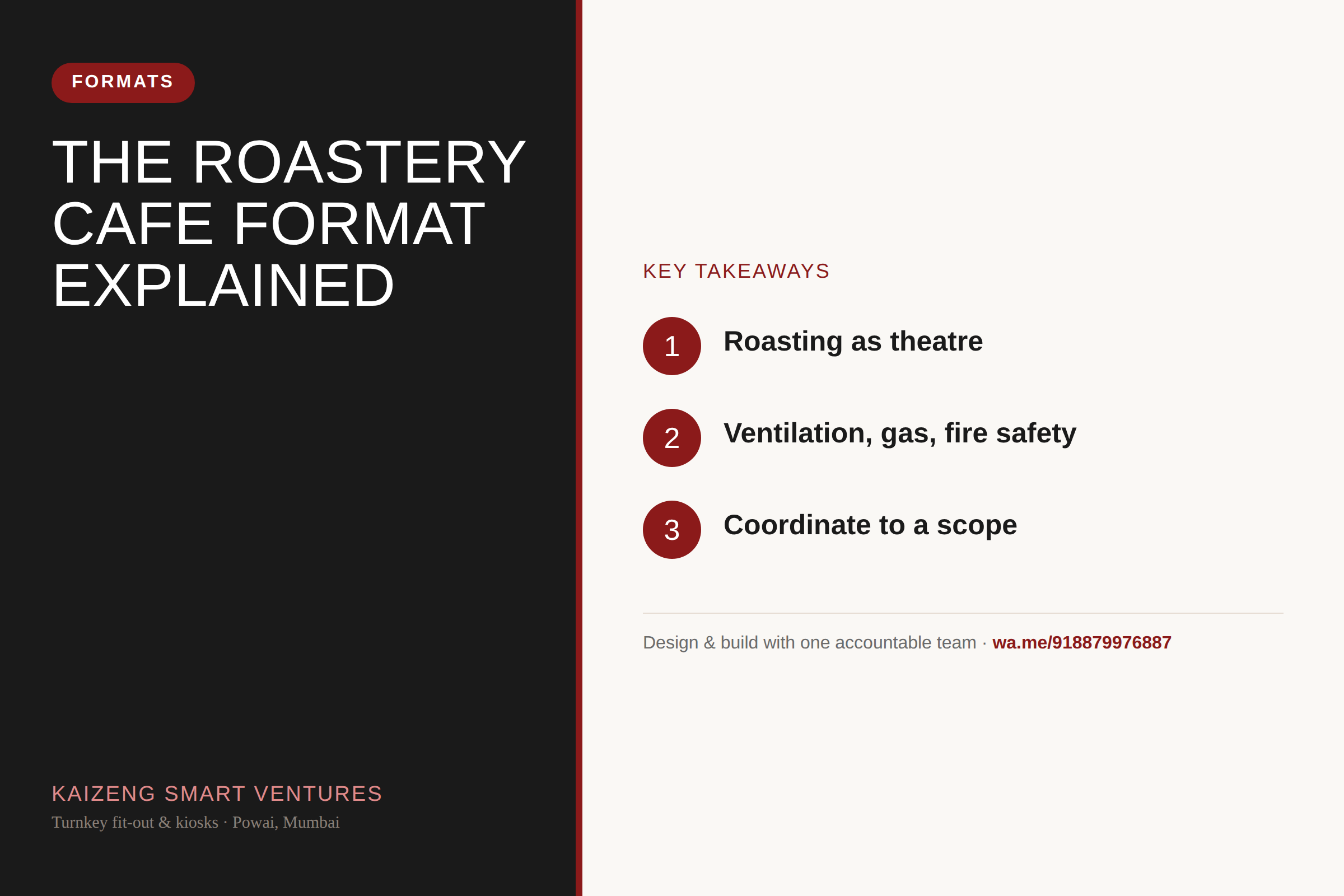
A roastery cafe is a venue that combines a working coffee roaster with a normal cafe service area, so guests can drink coffee that was roasted metres away while watching the roasting happen in the room. Building one properly means planning the roaster's ventilation, power, gas, fire safety and heat requirements into the shell from the start.
A roastery cafe puts the origin of the coffee on stage. Instead of beans arriving pre roasted from somewhere unseen, the roasting happens in the room, in view of the guest, as part of the experience. It is one of the most compelling cafe formats because it turns a functional process into theatre and gives the brand a story customers can watch unfold. But it is also one of the most demanding to build, because a roaster is industrial equipment with real requirements. Here is how the format works and what it takes to build one properly.
What is a roastery cafe, exactly?
At its simplest, a roastery cafe combines a working coffee roaster with a normal cafe service area, so guests can drink coffee that was roasted metres away. The roaster becomes the centrepiece, visible through glass or open to the room, and the freshness and craft become the selling point. Some roasteries roast only for their own cups, others also sell retail bags and supply wholesale. The format ranges from a small showpiece roaster to a serious production setup with the cafe attached, and the scale you choose drives every build decision that follows.
How should the layout balance show and function?
The core design challenge is that a roaster is both a spectacle and a piece of working machinery. You want guests to see it, but the roasting zone also needs space for green bean storage, cooling, the operator to work safely and finished beans to move to the bar and retail. A good layout gives the roaster pride of place, usually behind glass or a low barrier, while keeping the working flow behind it clear. Green beans come in, roasting happens on show, roasted beans move to service and shelves. The guest sees the magic, the operator gets a safe, efficient path. Getting that separation right is design work, and it is central to how we plan projects in the cafe and coffee segment.
What equipment does a roastery cafe need, and what services does it demand?
A commercial roaster is not a plug and play appliance. It brings requirements that shape the whole shell.
| Requirement | What it demands |
|---|---|
| Ventilation and exhaust | Removes heat, smoke and roasting fumes safely, often the single biggest technical demand |
| Power and gas | Power and, for many roasters, a gas supply sized correctly and installed to code |
| Fire safety and chaff management | Manages the heat and combustible chaff that roasting produces |
| Heat management | The air conditioning must cope because the roaster warms the room |
These are not decorative details. They are the difference between a roastery that runs safely for years and one that fights its own building. They must be planned into the shell from the start, not bolted on later.
What experience are you actually selling?
Done well, a roastery cafe sells more than coffee. It sells provenance, freshness and craft that guests can see, smell and hear. The aroma of roasting, the sight of the drum turning, the story a barista can tell, all of it builds a premium perception that ordinary cafes cannot match. That experience justifies a higher price point and creates strong word of mouth. To capture it, the design has to celebrate the process, framing the roaster with good sightlines and lighting so it reads as the hero the moment someone walks in.
What does a roastery cafe cost to build?
A roastery cafe costs more and takes more coordination than a standard cafe, because you are effectively building a small production facility inside a hospitality space. Ventilation, gas, power, fire safety and structural allowances for heavy equipment all add scope. The single most important thing is coordination, since the roaster specification drives the mechanical, electrical and safety design, and those must be locked before finishes. This is exactly where one accountable team against a fixed scope matters most. Our interior fit-out execution ties the roaster requirements, services and finishes into a single BOQ so nothing is discovered late and expensive.
Common questions
Do I need a huge space for a roastery cafe? Not necessarily. Small showpiece roasters exist for compact spaces. But even a small roaster brings ventilation, power and safety requirements, so the constraint is services and layout more than raw floor area.
What is the biggest technical challenge? Ventilation and exhaust. Removing roasting heat, smoke and fumes safely is the demand that most shapes the shell, and it must be designed in from the very beginning.
Is a roastery cafe worth the extra cost? If provenance and craft are central to your brand, yes. The visible roasting builds a premium experience and a story that supports higher prices and strong loyalty, which many owners find repays the added investment.
Ready to build a roastery that runs as well as it looks?
A roastery cafe rewards careful planning and punishes shortcuts. Kaizeng Smart Ventures coordinates the roaster, services and finishes into one locked scope and builds from bare shell with a single accountable team. Explore our services overview or reach us through contact to plan a roastery that works as hard as it impresses.
