
Why Handover Shouldn't Be the First Time You Test the Space
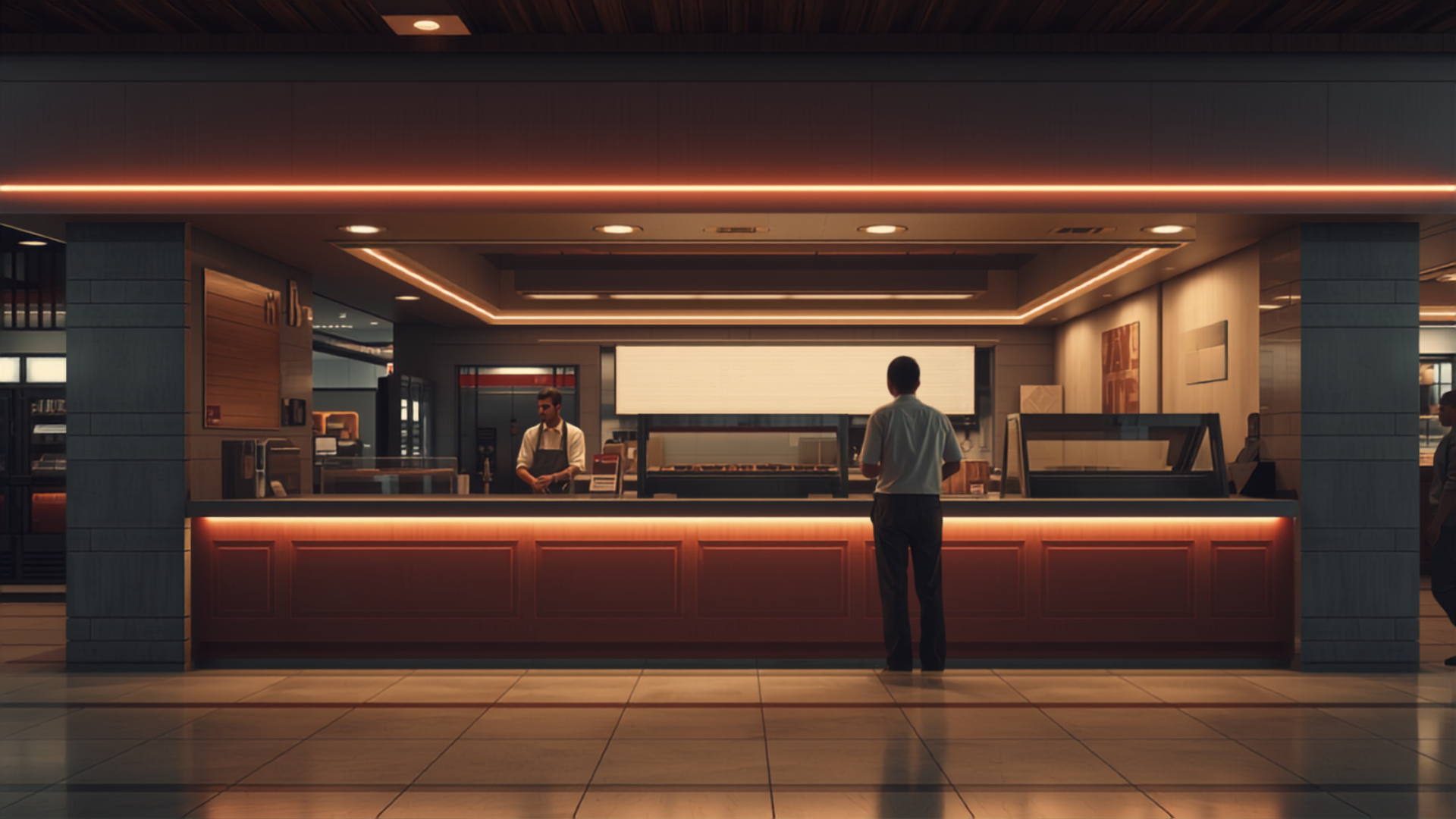
A kiosk can pass every inspection, get flawless finishes, and still fall apart on its first Saturday. That happens because a building doesn't run itself. People do, and if nobody has moved through the space the way a live shift actually will, opening day becomes the test nobody planned for.
Construction sign-off and Day One are not the same milestone
We've handed over kiosks and cafe counters where every weld was clean, every laminate edge was sealed, and the client still called us in week two because a queue backed into the aisle, or the exhaust couldn't keep up during the lunch rush, or the till sat where nobody could actually reach it mid-service. None of that shows up on a site inspection. It shows up the first time real staff work a real shift inside the space.
A punch list checks whether the work was built to drawing. It doesn't check whether the drawing was ever right for how the place would actually be run. Those are two different questions, and most fit-outs only ask the first one.
What does a mock operational walkthrough actually check?
Before we call a job finished, we ask a short set of questions that have nothing to do with finish quality. Can staff move between counter, storage and prep without crossing each other's path? Can a delivery come in without cutting through the customer queue? Can housekeeping reach every corner, and can maintenance get to the DB and equipment without shutting the front down? Can the counter clear a peak-hour queue at the pace the format promises?
You can't answer any of that from a drawing. You answer it by putting people in the space and watching them work.
Why is our handover tested, not just signed off?
Every Kaizeng project ends with the same structure: final quality checks, a snag-free walkthrough with the client physically present, a documentation pack, warranties, and a short window of opening support where our team stays close in case something needs adjusting once the space is live. We don't call it done until someone has actually run it.
We build that discipline into the commercial terms too. On our standard payment schedule, the final tranche isn't released on completion of construction. It's released after testing, deep-clean and snag closure are signed off. That's a deliberate choice. It means the last rupee of a project is tied to the space actually working, not just looking finished in a photograph.
Workmanship warranties follow the same logic. On a recent Mumbai fit-out we carry a three-month workmanship warranty from the date of handover, not from the date we last touched the site. If something surfaces once real footfall hits the space, that's still our problem to fix.
What do we physically test before we hand over the keys?
On a double-deck coffee kiosk we recently built and commissioned in Mumbai, testing meant more than switching the lights on. We ran the equipment under full load to check power draw and heat, checked exhaust and drainage flow at actual service volume, confirmed the POS and till sat where a barista would reach it without turning their back on the queue, and timed how fast a real order moved from counter to cup. Only after that did we call it commissioned. A kiosk that looks finished and a kiosk that's been tested under load are not the same delivery, even if they look identical in a handover photo.
Airport discipline, applied to every project now
We learned to test before handover the hard way, building kiosk and pickup-zone units for Uber across several Indian airports, including Mumbai, Pune and Kolkata. An airport gives you no room to fix something after the fact. Install windows are fixed to the minute, safety checks are non-negotiable, and there's no quiet week to smooth over a mistake once passengers are moving through the space. So you test everything before you sign the handover, not after.
That standard didn't stay at the airport. It's now how we close out a mall kiosk, a QSR counter or a standalone cafe too. It's the same reason a brand like Penguin Bean or Tuskin gets a space that runs correctly on day one rather than a punch list of fixes discovered by their own staff during the first week of trading.
What is the real cost of skipping this step?
A mock walkthrough or a load test adds a day, sometimes two, to a schedule that already feels tight. Skipping it costs more than that. A queue that backs up on opening weekend costs you the customers who never come back to try again. A till in the wrong spot slows every single transaction for as long as it sits there, and most operators never go back and fix it because retraining feels like more trouble than it's worth. The fix is cheap before handover. It gets expensive fast once the space is live and the team has already built habits around a bad layout.
If you're running a rollout across more than one site, this matters even more. A layout flaw that goes untested at unit one gets copied straight into units two through ten before anyone notices it's a flaw at all.
What should you ask your build partner before you sign off?
Before you accept handover on your next store, kiosk or cafe, ask three things in plain language. Has anyone actually worked a shift inside this space before I did? Is any part of my final payment tied to how the space performs under load, not just how it looks on the day of handover? And is there anyone on call in the first weeks if something needs adjusting once real customers show up? If the answer to any of those is no, you're about to find out on your own opening day, in front of your own customers.
That's the standard we build every kiosk, cafe and retail counter to at our facility in Powai, Mumbai, whether it's a single unit or a national rollout. See how we build and test retail kiosks, or look at how it plays out on real sites in our project work. If you're planning a launch and want the handover tested before you're the one testing it, discuss your project with us.
