
QSR & Kiosk Cafe Formats for Malls and Airports
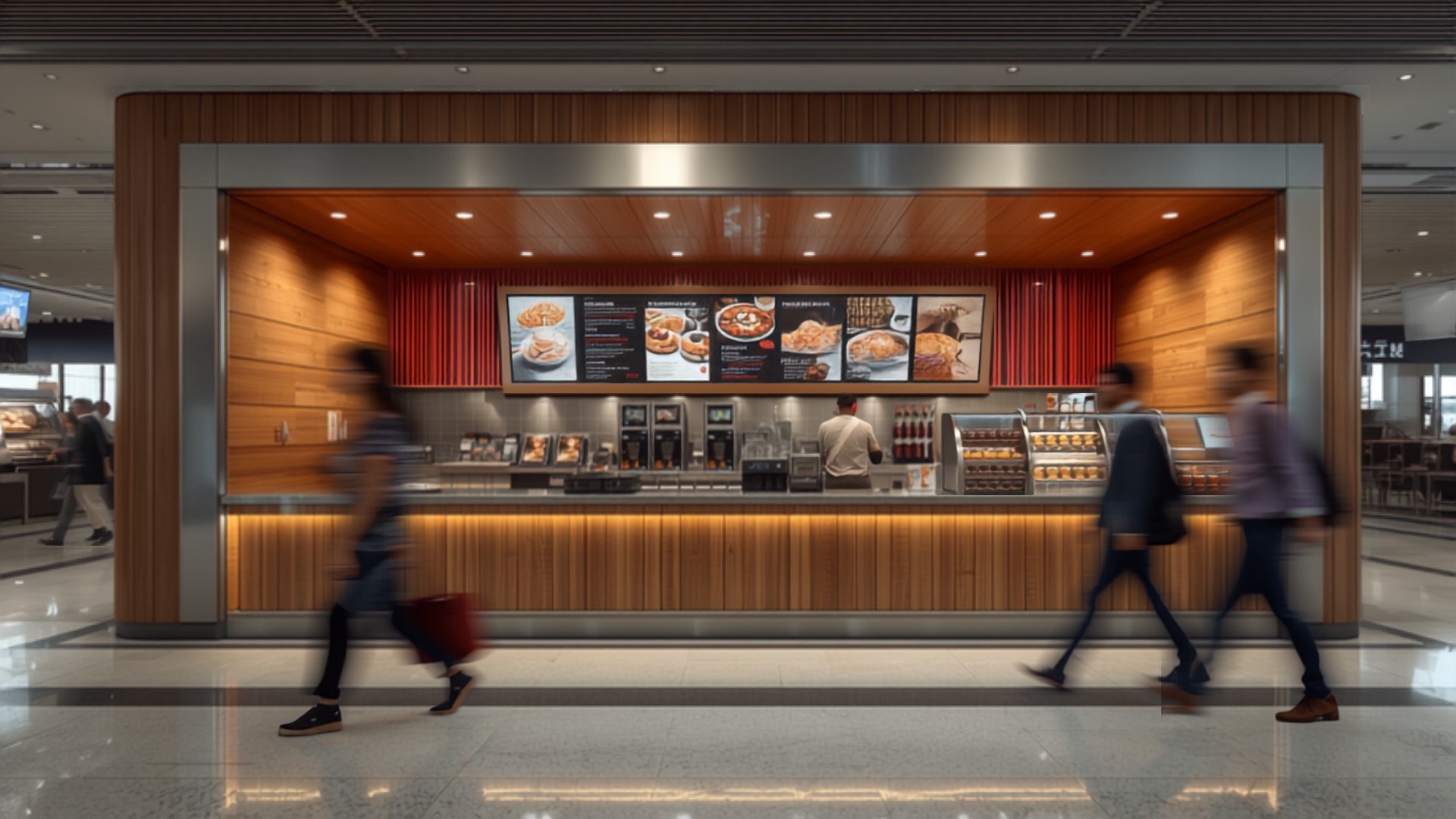
We build both formats in our own Powai unit and have installed kiosk and pickup-zone units across Mumbai, Pune and Kolkata airports for Uber.
The right first question is not kiosk or QSR outlet, it is which format matches the site you have actually been offered, the footfall pattern at that site, and the menu you want to run. A kiosk is a self-contained 50 to 150 sq ft unit with no seating for high-footfall transit zones, while a QSR outlet starts around 300 sq ft with some seating for food courts and high streets. Brands planning a mall or airport rollout usually ask the wrong first question. They ask "kiosk or QSR outlet" when the real question is which format matches the site. Get the format wrong for the site and no amount of interior polish fixes it.
| Format | Where it works | Notes (size, cost, build) |
|---|---|---|
| Kiosk | High-footfall transit zones such as airport corridors, metro concourses and mall atriums, where the customer is moving and wants a fast transaction, not a table | Self-contained unit, typically 50 to 150 sq ft, no seating, compact counter with storage below or behind, menu built around speed, frozen design to installed unit in 8 to 25 days |
| QSR outlet | Food courts, mall high streets and standalone high-street locations where customers are willing to sit for 10 to 20 minutes | Larger format usually starting around 300 sq ft and going up, some seating, a proper counter and kitchen zone, takes longer to build than a kiosk because of the added kitchen services and seating |
| Airport kiosk and pickup-zone unit | Inside a live, operating terminal | Higher compliance bar than any mall, fire safety, structural sign-off, security clearance and install windows measured in hours, built for Uber at Mumbai T2 in 45 days against a planned 60, Pune International Airport in 15 against a planned 20, Kolkata NSCBI in 7 days and Navi Mumbai International Airport in 5 days |
What separates a kiosk from a QSR outlet?
A kiosk is a self-contained unit, typically 50 to 150 sq ft, with no seating attached. It runs on a tight service footprint: a compact counter, storage below or behind it, and a menu built around speed rather than a sit-down experience. Kiosks work well in high-footfall transit zones (airport corridors, metro concourses, mall atriums) where the customer is moving and wants a fast transaction, not a table.
A QSR outlet is a larger format, usually starting around 300 sq ft and going up from there, with some seating, a proper counter and kitchen zone, and a menu that can support a few minutes of dwell time. It suits food courts, mall high streets and standalone high-street locations where customers are willing to sit for 10 to 20 minutes.
The mistake we see most often is a brand taking a QSR menu and trying to run it out of a kiosk footprint, or taking a kiosk-simple menu and paying for a QSR-sized lease it doesn't need.
Why do airport formats have their own rules?
Airport kiosks and pickup-zone units sit in a category of their own. The compliance bar is higher than any mall: fire safety, structural sign-off, security clearance for anyone on-site, and install windows that are often measured in hours, not days, because you're working inside a live, operating terminal. We know this from direct experience. We built Uber's kiosk and pickup-zone units at Mumbai T2 (45 days against a planned 60), Pune International Airport (15 days against a planned 20), Kolkata's Netaji Subhas Chandra Bose International Airport (7 days) and Navi Mumbai International Airport (5 days, with statutory approvals arriving only in the final stage).
What all four of those had in common wasn't the design brief. It was the discipline: materials documented and approved before fabrication started, installation sequenced against a fixed access window, and one team carrying the job from drawing to handover so there was no gap between the people who designed it and the people who built it on-site.
How do you size your format to the site?
Before choosing kiosk or QSR, look at three things about the actual site you've been offered. First, footfall pattern: is it a walk-through corridor or a destination zone where people linger? Second, dwell time available: transit sites give you seconds of attention, food courts give you minutes. Third, services available at the site: power load, water and drainage, and exhaust routing, because a kiosk with hot cooking equipment needs the same exhaust planning as a full outlet, just in a smaller footprint.
A mall kiosk built for heavy footfall also needs to survive overnight restocking windows, since most malls only give vendors a narrow window after closing to bring in stock. We design storage and access with that window in mind from the first drawing, not as an afterthought.
Not sure which format fits your site? Discuss Your Project and send us the floor plan or the mall's offered unit size. We'll tell you which format actually works there. Quicker option: message us on WhatsApp for a fast estimate.
What does it cost and how fast does it move?
Every kiosk or QSR unit we build goes against a bill of quantities agreed before we cut anything, so the cost is clear from day one rather than a moving target. A standard kiosk typically goes from frozen design to installed unit in 8 to 25 days. A QSR outlet takes longer because of the added kitchen services and seating build, but the same principle holds: because manufacturing and installation both sit inside our company, there's no handoff gap between a designer, a fabricator and a local installer, and no separate calendar to chase.
Why use one team for both formats?
The reason brands running national rollouts stay with one manufacturer across formats is consistency. A brand opening kiosks in five malls and a QSR outlet in a sixth wants the same finish quality and the same brand standard across all six, not six different local vendors each interpreting the brief a little differently. We build kiosk and QSR formats from the same Powai facility with the same production team, so a rollout that mixes formats across sites doesn't mean managing multiple vendors.
How do you get the brief right before you call a manufacturer?
The fastest way to get an accurate quote is to bring real numbers to the first conversation: the unit size the mall or airport authority has offered, the footfall data if you have it, your target menu, and any services already available at the site (power load, water point, exhaust route). We've had brands come to us with a Pinterest board and a rough sq ft number. That works for a mood board. It doesn't work for a bill of quantities, and it usually means a second round of revisions once the real site constraints show up.
If you're weighing kiosk against QSR for a mall or airport site, bring us the actual site details rather than the concept. Discuss Your Project and we'll tell you honestly which format fits, what it will cost against a real bill of quantities, and how fast we can get it installed.
