
Mall Kiosk Cost in India: What Drives the Price
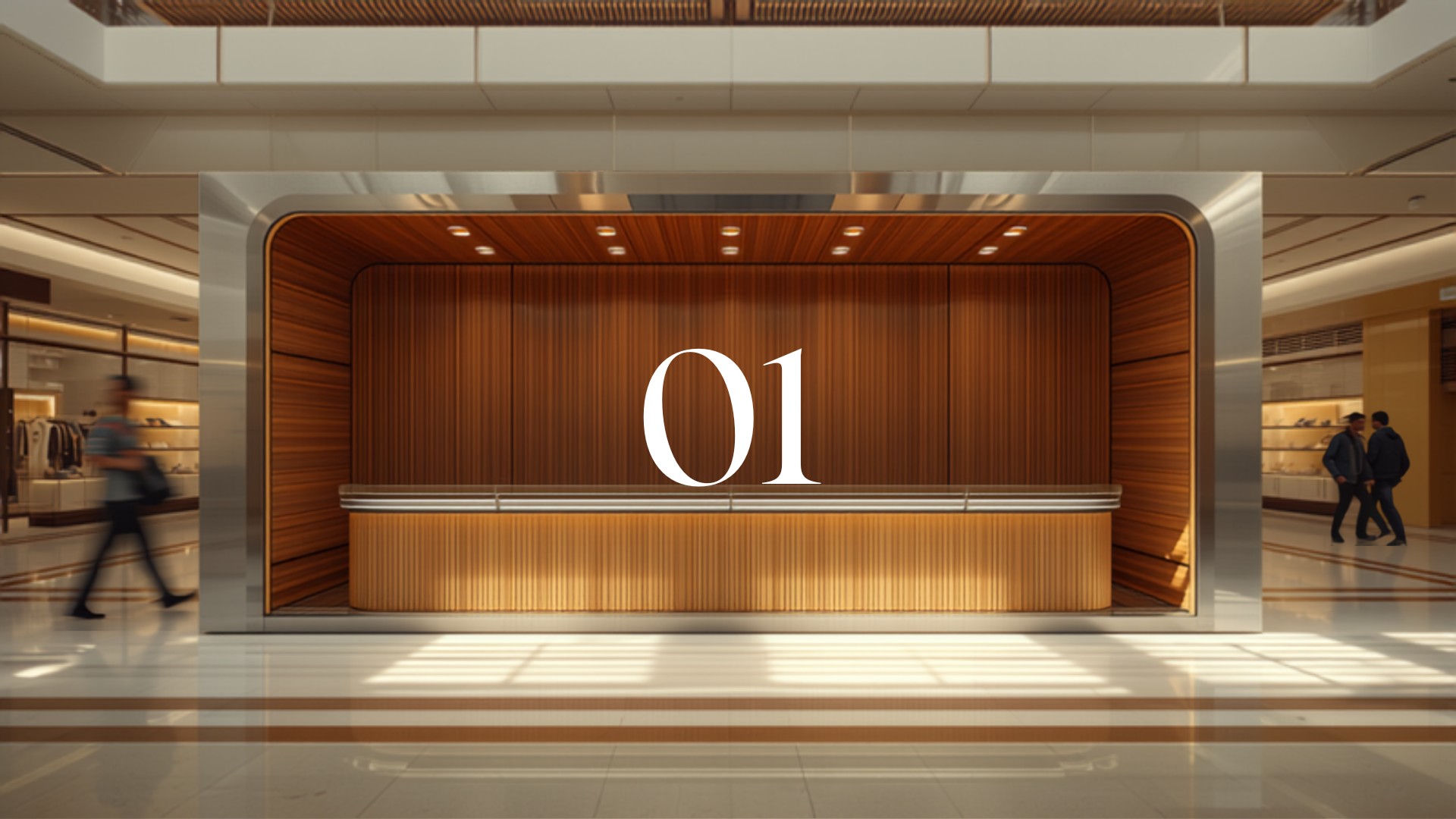
Mall kiosk cost in India typically runs between 3.5 lakh and 11 lakh rupees, and the gap between those two numbers has almost nothing to do with size. It comes down to what's inside the box: the frame, the cladding, the counter, the lighting, and whether the unit is built to last five years of daily footfall or two.
We quote every kiosk against a bill of quantities before we cut a single sheet of steel. That's the only way a founder or expansion manager can compare two quotes on equal terms. A rate per square foot means nothing until you know what's actually included in it.
How much does a mall kiosk cost in India?
Here is what real kiosks cost, drawn from units we have actually built and priced against a full bill of quantities.
| Kiosk format | Size | Indicative cost (incl. GST) | Cost per sq ft | Build time |
|---|---|---|---|---|
| Retail kiosk, base build | 6ft x 4ft (24 sq ft) | around 4.4 lakh | around 18,000 | 15 to 21 days |
| Retail kiosk with refrigerated display | 6ft x 4ft (24 sq ft) | around 6.1 lakh | around 25,000 | 15 to 21 days |
| Cafeteria kiosk | 8ft x 8ft (64 sq ft) | around 8.6 lakh | around 13,400 | 3 to 4 weeks |
| Cafeteria kiosk | 10ft x 10ft (100 sq ft) | around 10.8 lakh | around 10,800 | 3 to 4 weeks |
On a recent retail pastry kiosk we built at 6ft by 4ft by 8ft, a 24 square foot footprint, the base build came to roughly 3.7 lakh rupees before tax, about 4.37 lakh with GST. Add a refrigerated display counter, the kind a bakery or dessert brand needs to hold stock cold through the day, and the same kiosk moves to around 6.08 lakh with GST. That single line item, one integrated fridge unit, accounts for close to a third of the total cost.
A cafeteria-format kiosk at 8ft by 8ft runs close to 8.6 lakh rupees with GST. Go up to 10ft by 10ft and the number rises to roughly 10.8 lakh, but the cost per square foot actually drops, from about 13,400 to 10,800. Bigger kiosks spread fixed costs like electrical installation and logistics across more floor area, so the price per square foot rarely scales in a straight line.
What goes into a mall kiosk quote?
Break down a typical kiosk BOQ and each work package takes a predictable share of the total.
| BOQ line item | Typical share of cost |
|---|---|
| Structural frame and base platform | around 15% |
| Panel substrates and cladding | around 20% |
| Feature arch or branded display front | around 13% |
| Electrical, distribution board, wiring and lighting | 10 to 11% |
| Branding and illuminated signage | around 10% |
| Counter, cabinetry, floor finish, access doors, installation | the remainder |
None of these are optional line items you can strip out to hit a lower number without consequence. Cheap cladding fails a mall's fire and finish inspection. Underpowered wiring means your lighting looks flat next to the kiosk beside you. Every rupee in the BOQ is doing a job, and a vendor who quotes a flat lumpsum figure without one is usually hiding where they've cut corners.
What makes a mall kiosk cost more?
Format changes the number more than most people expect. A high street cart built for a market stall costs less than an airport unit, because airport work carries documentation, materials testing and finishes that a landside mall stall never needs. We've built kiosk and pickup zone units for Uber across airports in Mumbai, Pune and Kolkata, and the compliance layer alone, fire-rated materials, structural sign-off, controlled install windows, adds real cost that a mall kiosk simply doesn't carry.
Refrigeration and food service equipment is the other big swing factor. A dry retail kiosk selling accessories or cosmetics has a straightforward BOQ. An F&B kiosk with a chiller, a coffee machine or a display fridge adds equipment cost, extra electrical load, and often a second finish pass around the wet zone. If your category is food and beverage, budget for that upfront rather than discovering it after the drawings are frozen.
What's included in a Kaizeng kiosk quote?
A Kaizeng kiosk quote lists every work package by name: structural frame, panel cladding, feature display, counter and cabinetry, side access door, electrical and lighting, floor finish, branding, and logistics and installation. Payment usually follows the build in three stages, roughly half on order confirmation, another 30 to 40 percent once fabrication is complete and ready to ship, and the balance on handover. You're never paying the full amount before you've seen the unit take shape.
How long does a mall kiosk take to build?
A standard retail kiosk goes from design freeze to handover in about 15 to 21 days. A cafeteria-format unit runs closer to three to four weeks once the design is signed off and materials are approved. Every one of those days is production time in our own Powai unit, not a subcontractor's queue. That matters for cost too. A vendor waiting on someone else's workshop schedule quotes in buffers, and buffers show up in your price.
Rush timelines cost more, and vague scopes cost even more than that. A brief that says "kiosk with signage" instead of a locked BOQ leaves room for mid-build changes, and every change after fabrication starts means re-cut material and a fitter standing idle. The cheapest way to control kiosk cost isn't negotiating the quote down. It's freezing the design before anyone picks up a tool.
How does Kaizeng price a kiosk?
We build every unit in our own 6000 square foot facility in Powai, Mumbai, so the team that quotes your kiosk is the same team that fabricates and installs it. You get a line-item BOQ before we start, not a lumpsum number with the details buried inside. Browse our kiosk designs and formats to see the range we work from, mall, airport, metro and high street builds, all priced the same way.
If you're scoping a kiosk for a single mall unit or planning a multi-city rollout, tell us the format, the site and your dates. We'll come back with a real BOQ, not a ballpark. Discuss Your Project with our team and get a number you can actually plan a launch around.
