
Why Your Kiosk Rollout Breaks at City Five, Not City One
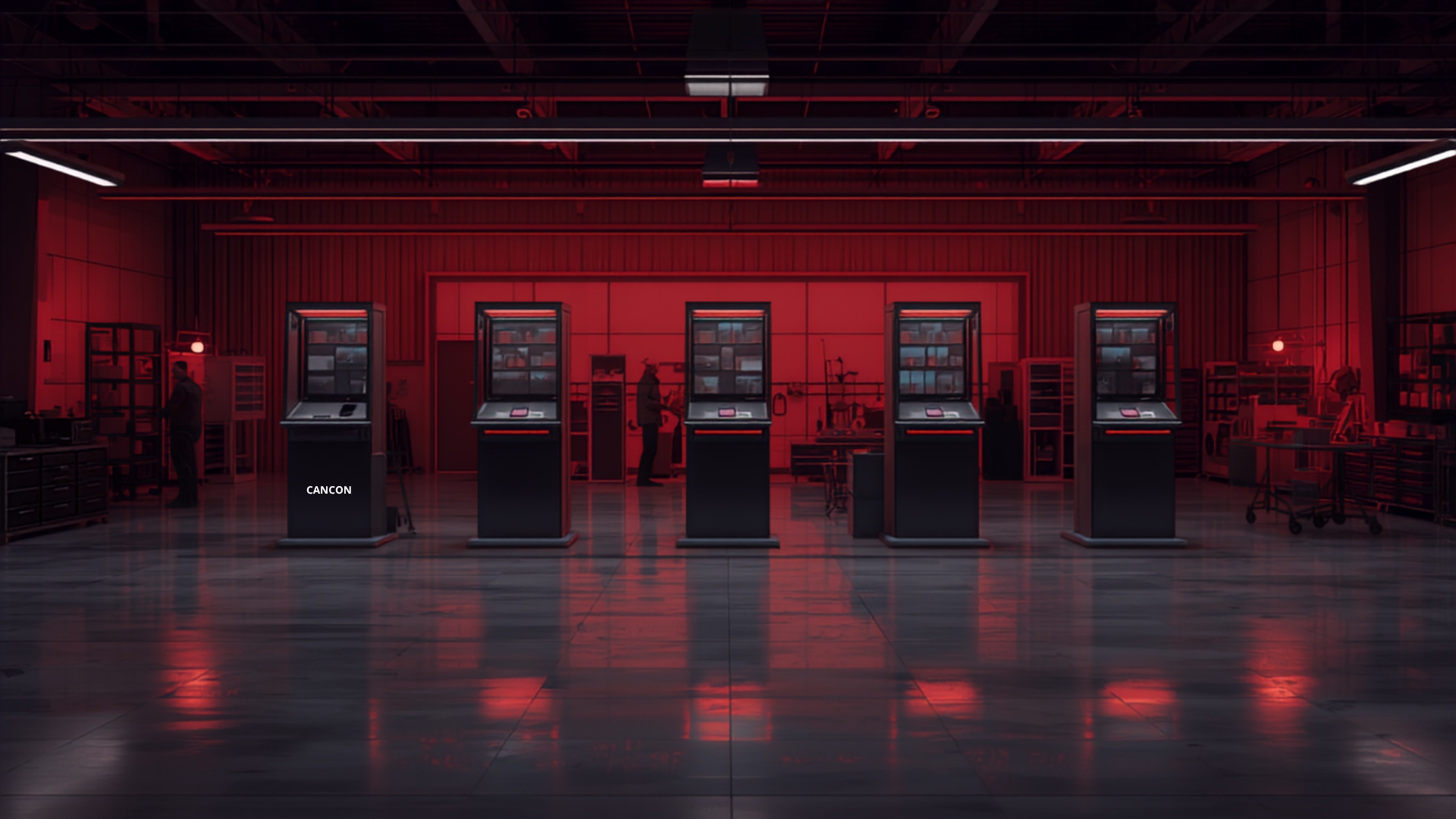
Why do the first three cities always look fine?
A kiosk rollout usually breaks at city five, not city one, and the reason is structural: the coordination model that worked for three sites was never built for five. Every kiosk rollout starts the same way. City one goes well because everyone is watching it. The founder is on the call, the vendor is proving themselves, and the site gets more attention than any other site will get again. City two goes well too, mostly on momentum from city one. City three starts to wobble a little, but it is still small enough that a couple of phone calls fix it.
Then city five happens, and the wheels come off. Not because the team got worse. Because the coordination model that worked for three sites was never built for five.
We have watched this pattern across enough retail and F&B rollouts to know it is not bad luck. It is math. A brief that gets explained in person for the first site gets forwarded as an email attachment for the fifth. A finish that got checked by an actual person in city one gets approved from a WhatsApp photo by city five. Nobody planned to lower the bar. It happens because the number of moving parts grows faster than anyone's attention can stretch.
What actually breaks, and why is it rarely the design?
Spec drift between vendors
If city one and city five are built by two different local contractors, they will not match, even with the same drawing in front of both of them. Laminate batches differ. A local fabricator swaps a bracket for one they already have in stock. Paint finish reads slightly warmer under one site's lighting. Individually these are small. Stacked across ten sites, they turn a national brand standard into ten stores that all sort of resemble the brand, and a store audit that flags every single one for a different reason.
No one owns the calendar
On a single site, one person can hold the whole schedule in their head. Across a rollout, the calendar has to survive handoffs between design, procurement, fabrication, freight and install, usually across four or five vendors who have never worked together before. Every handoff is a place a date can quietly slip a week. By city five, a program that promised one date per site is apologizing for a few of them, and the marketing team that booked the launch around those dates finds out last.
Quality control moves on-site, where a mistake is the most expensive to catch
When one workshop builds every unit, a bad weld or a warped panel gets caught before it ships, on a factory floor, where fixing it costs a few hours. When five different local shops each build their own version, the first time anyone sees the finished unit is often on-site, in front of the mall's own fit-out inspector, on a date that was already tight. Fixing a mistake there costs a full day, a difficult call with the landlord, and sometimes a delayed opening.
What does holding the line across many sites actually look like?
We built Uber's kiosk and pickup-zone units across several Indian airports, including Mumbai, Pune and Kolkata. Airports are about the least forgiving place to run this experiment. The compliance bar does not move for a rollout schedule, and every terminal has its own install window, security clearance and inspection process. If our spec was ever going to drift, it would have shown up there first. It did not, because one workshop built every unit against the same bill of quantities and then sent its own team to install each one, instead of handing the drawing to five local contractors and hoping.
That is the real lesson from the airport programme, not the compliance story people usually take from it. The reason five sites can look identical to one site is not a better drawing. It is whether the same hands are still building unit five that built unit one.
The fix is structural, not managerial
Most rollout problems get treated as a management problem. Hire a stronger project manager, add a weekly review call, build a bigger tracker. Those help. They do not fix the underlying issue, which is that the build itself is split across vendors who were never accountable to each other in the first place.
So the more durable fix is to remove the split. One manufacturer, one bill of quantities, one factory floor, one team that installs what it built. On paper it looks like a smaller change than adding a management layer. In practice it is the one that still holds once you are past city five, when nobody has the bandwidth left to manage the gap by hand.
There is a cost question here too, and it usually runs the other way from what founders expect. A single accountable manufacturer costs more per unit on paper than the cheapest local quote in each city. It costs less across the program, because rework, delayed openings and mismatched stores are the expensive part of a rollout, not the fabrication line item.
If your rollout is still small, this is the moment to fix it, before the coordination gap gets built into ten more sites. We build every unit in our own 6000 sq ft facility in Powai and send our own team to install it, whether that is one flagship store or a fifty-site national program. Our kiosk catalogue and recent projects show the range of formats we have held to one spec across many cities.
Planning a multi-city rollout and want to know whether your current vendor mix will survive past city five? Discuss Your Project with our team and we will walk through what breaks first and how to build around it.
