
How We Build Retail Kiosks Inside a Live Airport
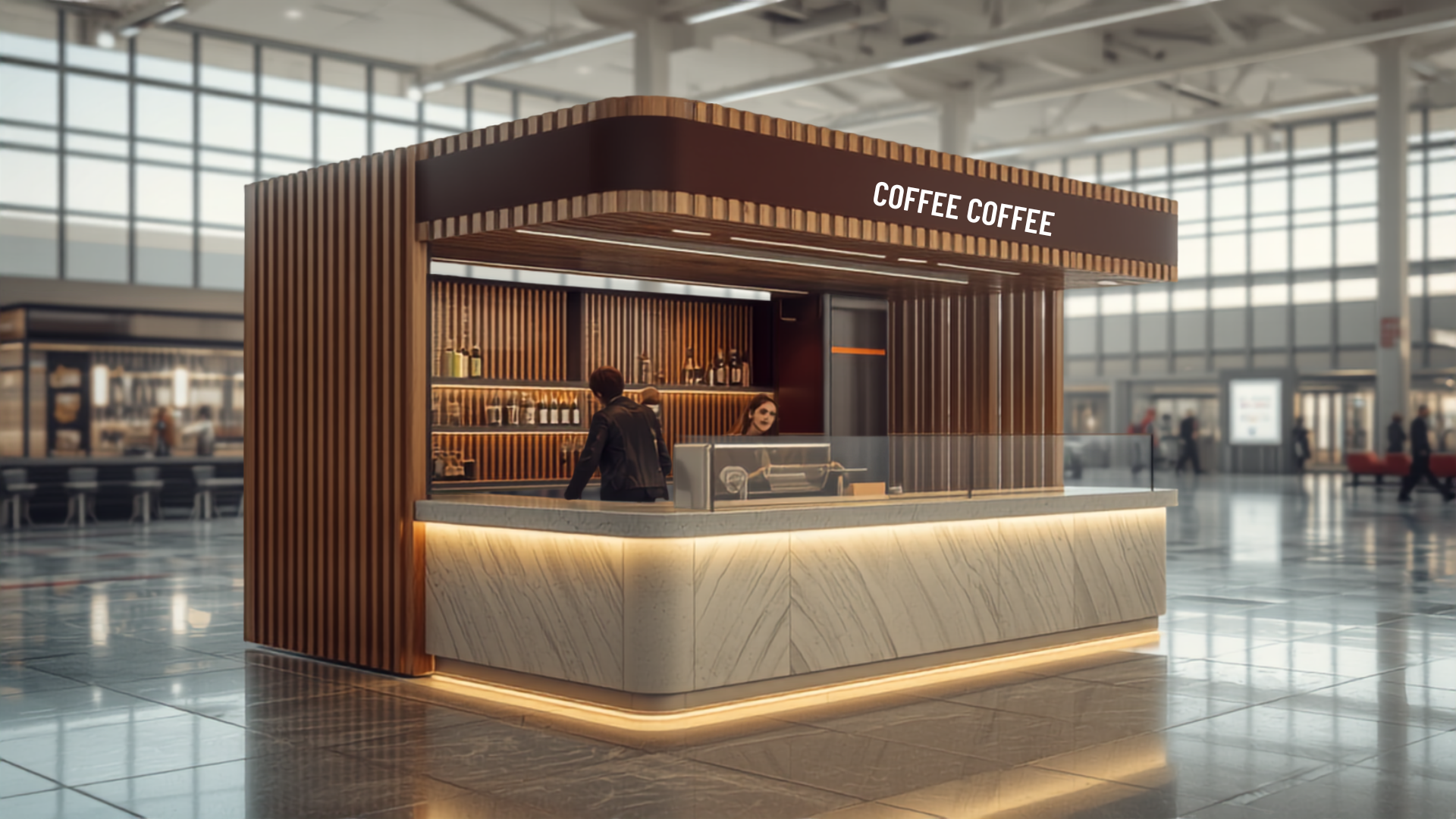
Kaizeng builds retail kiosks inside a live airport by locking every approval and material specification before install, freezing a line-by-line bill of quantities, using terminal-grade materials, and doing the assembly in the narrow overnight windows we commit to. Building a retail kiosk inside a working airport is not hard because the kiosk itself is complicated. It is hard because the airport never stops for you. Flights keep landing, passengers keep moving, and your build has to happen in the gaps nobody else wants. We learned how to do this the hard way, building kiosk and pickup units for Uber across several Indian airports, including Mumbai, Pune and Kolkata. This is what actually goes into putting a retail unit inside a terminal, and why the discipline it demands makes us better at every other job too.
An airport gives you no room to improvise
On a high-street site, if a material shows up late you send someone to buy it and lose half a day. Inside a terminal you cannot do that. Every material that enters the premises needs prior approval. Access is controlled, and your install window is fixed, often a few overnight hours when the terminal is quiet. Miss it and you wait for the next one, which could be days away.
So the real work happens long before anyone touches a tool. We remove uncertainty first. Approvals are locked, material specifications are frozen, the bill of quantities is signed off, and procurement runs in parallel with fabrication instead of after it. By the time our team reaches the terminal, there are no decisions left to make on site. There is only assembly.
Why does the bill of quantities come first?
We do not quote a kiosk with a round number and sort out the details later. We build a bill of quantities first, line by line, and freeze it before anything is cut. That matters everywhere, but in an airport it is the difference between a clean handover and a stalled project. A vague scope means a change halfway through, and a change halfway through means a fresh material approval, which means a missed install window.
Freezing the BOQ early also protects your budget. One extra light fixture. A different flooring material. A larger counter. An added storage cabinet. Each looks small on its own. Inside a regulated build, each one ripples through design, procurement, fabrication, logistics and approvals before it reaches the site. We kill those surprises at the start so they never turn into a delayed opening.
What is a terminal-grade kiosk actually made of?
A kiosk that lives in a terminal takes years of public handling, so we build the body to survive it. The frame is a fabricated mild-steel structure, base, columns, roof and fascia, all given an anti-rust treatment before anything is clad. Panels sit on boiling-waterproof plywood. The visible finishes are chosen to read well from a distance and hold up under constant use: walnut-finish WPC louvers, an engineered-stone service counter with a finished edge, toughened glass for display and serving hatches, and recessed LED spotlights with accent lighting around the counter and signage.
None of this is decoration for its own sake. Airport authorities ask for documented materials and finishes, and a terminal fit-out gets inspected against a stricter safety bar than a mall or a market cart. Building with named, approved materials from the first drawing is what lets us pass those checks without a scramble the night before install.
Built in our own unit, then installed by our own team
Every one of these units is fabricated in our own 6000 sq ft facility in Powai, Mumbai. That is deliberate. When manufacturing sits inside the company, the people who quote your kiosk are the same people who cut, weld, laminate and wire it. Structural, electrical, plumbing and finish checks all happen in the workshop before dispatch, then again on site before handover. Nothing important gets discovered for the first time inside a live terminal.
It also means the finish stays the same across every airport we ship to. A brand rolling out across three or four terminals does not want three or four local vendors each reading the guidelines a little differently. It wants one specification, built the same way every time. That is the thing an in-house manufacturer gives you that a coordinator of subcontractors cannot. You can see the range of units we build on our kiosks page, and the projects we have delivered across airports and malls.
How fast is it, and how do we hold the date?
A standard kiosk moves from a frozen design to an installed unit in roughly three to four weeks. Design development and a detailed 3D model take a few days. The itemised BOQ and sign-off take a couple more. Fabrication of the structure, cladding, joinery and electricals runs about a week to ten days. Then finishing, factory quality checks, and a short install-and-commission window on site.
We can hold that timeline because the production queue is ours. We are not waiting in line at someone else's workshop, and we are not chasing a separate installer's calendar. On one regulated build we committed to a 20-day window and handed the unit over in 15, not by rushing the work but by removing every decision that could have paused it. Inside an airport, a predictable date is worth almost as much as the kiosk. A week's slip can mean a week of paid retail space earning nothing, or a launch that drifts past the campaign meant to carry it.
The airport discipline now runs through everything we build
Working inside terminals changed how we build everywhere else. Documented materials, controlled installation, a clean handover with nothing left open. That started as an airport requirement. Now it is just how we work, whether the unit is going into a departure concourse or a shopping-centre atrium. If your build can survive an airport, a mall kiosk is a calmer version of the same job.
Planning a retail unit for an airport or mall?
If you are putting a kiosk or a branded counter into a terminal, a mall or a high-street site, we can scope it against a real bill of quantities and give you a timeline you can plan a lease around. Discuss Your Project with our team and we will walk you through the materials, the approvals and the install window before you commit to a date.
Kaizeng Smart Ventures LLP. Powai, Mumbai. www.kaizengventures.com
