
What Makes a Cosy Cafe Work: A Mumbai Design Guide
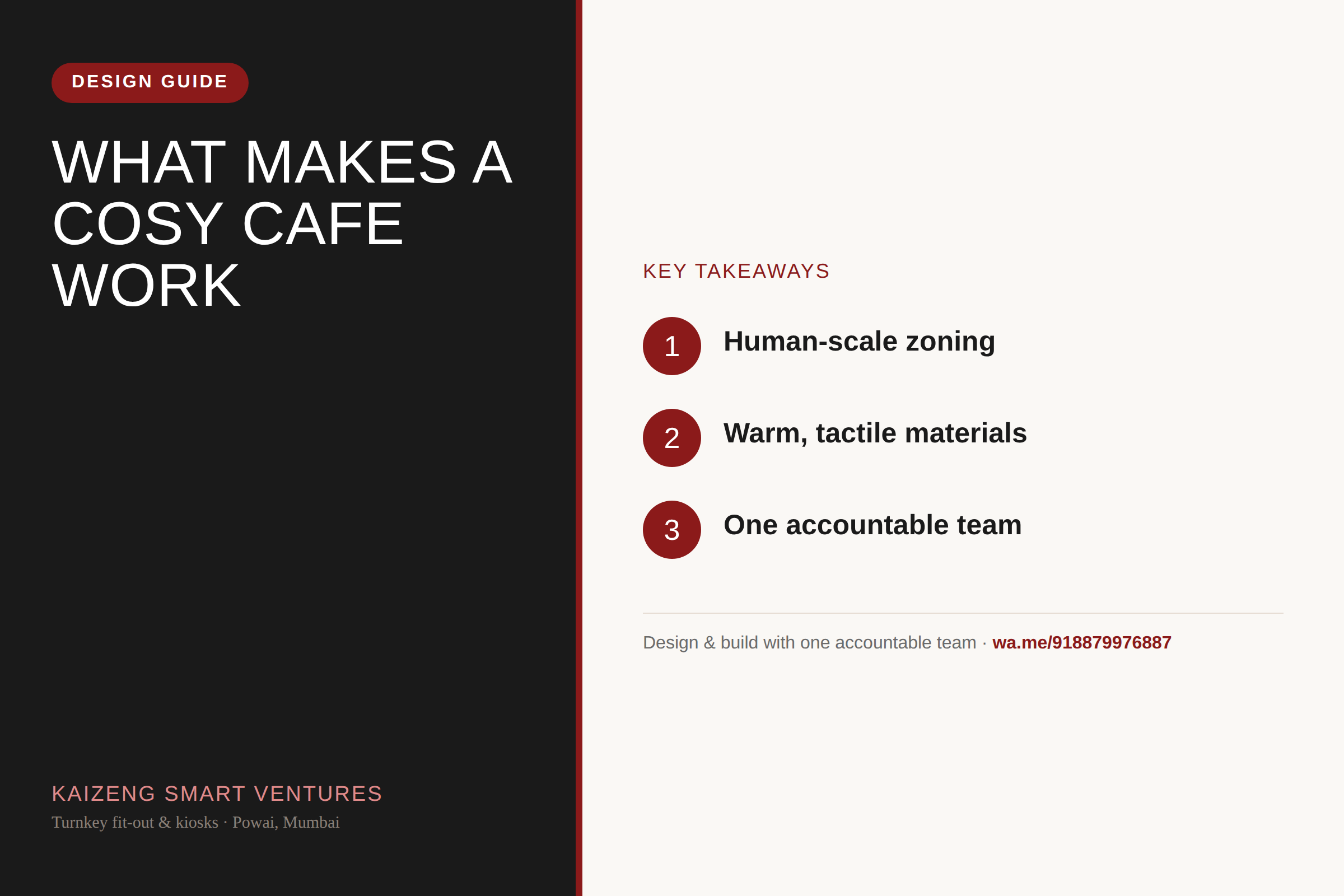
A cafe feels genuinely cosy when four fundamentals work together: human scale that breaks the room into intimate pockets, warm materials you want to touch, layered low level warm lighting at table height, and a layout that invites people to linger. Get these right and even a large or bright room can feel intimate.
Cosy is one of those words every cafe wants attached to it, yet very few rooms earn it. It is not a style you buy off a shelf. It is the result of specific decisions about scale, warmth, materials and light working together. Mumbai has a strong cafe scene, from Bandra lanes to Powai and the southern neighbourhoods, and the spaces people keep returning to almost always get these fundamentals right. This is a design guide to how, not a ranked list of names.
| Cosy fundamental | What this guide recommends |
|---|---|
| Human scale | Break the room into smaller, human sized pockets, nooks and booths |
| Materials | Timber, textured plaster, brick, rattan, wool, leather and soft textiles |
| Lighting | Many small, low, warm sources at table height, layered for depth |
| Layout | Comfortable, varied seating with enough separation so guests linger |
Why does human scale come first?
Cosy begins with scale. A cavernous room with high ceilings and long sightlines feels impressive but rarely intimate. Warmth comes from breaking a space into smaller, human sized pockets where a guest feels held rather than exposed. Lower ceiling zones, booths, nooks and a mix of seating create the sense that a corner belongs to you. Even a large cafe can feel cosy if it is divided into intimate zones instead of one big hall.
Which materials make a cafe feel warm?
Warm rooms use warm materials. Timber, textured plaster, brick, rattan, wool and leather all read as inviting because they carry texture and age well. Cold, hard and glossy surfaces do the opposite. The palette does not have to be dark. Plenty of bright, airy cafes feel cosy because they layer natural materials and soft textiles rather than relying on colour alone. The goal is a room that looks like it would feel good to touch.
- Natural timber for tables, shelving and detailing
- Soft textiles in cushions, upholstery and curtains
- Textured walls such as lime plaster, brick or clay
- Planting to soften edges and add life
- A restrained, warm palette rather than stark contrast
How does lighting set the mood?
If one element makes or breaks cosy, it is light. Flat, bright overhead lighting flattens a room and kills atmosphere instantly. Warmth comes from many small, low sources at table height, such as pendants, wall lights, lamps and candles, layered so pools of light draw the eye and shadows give depth. Warm colour temperature matters too. A cosy cafe leans warm, never clinical white. Get the lighting right and even a simple room feels special after dark.
How should the layout invite lingering?
Cosy spaces are designed for people to stay. That means comfortable, supportive seating, tables at the right height, and enough separation that you are not pressed against strangers. It also means variety, because a solo guest with a book, a couple and a group of four each need a different kind of spot. A thoughtful layout quietly tells guests they are welcome to settle in, which is exactly what builds loyalty and repeat visits. Our cafe and coffee work always starts from how you want guests to behave in the room.
How do you get it built without losing the feeling?
The hardest part is carrying a cosy concept from a moodboard into a finished space without it thinning out along the way. Warmth lives in the details, the joinery reveals, the lighting layers, the material transitions, and those are the first things to get cut when a build runs over budget or splits across many contractors. A single accountable team protects the intent. At Kaizeng Smart Ventures we ran the turnkey fit-out of Penguin Bean Coffee in Bandra from bare shell to opening in about eighteen days, holding the design detail against a locked BOQ. If you are looking for a cafe interior designer in Mumbai, that continuity is what keeps cosy from getting lost.
What do people most often ask about cosy cafes?
Q: Does a cosy cafe have to be dark? No. Cosy is about warmth and human scale, not darkness. Bright, airy cafes feel cosy when they layer natural materials, soft textiles and warm lighting.
Q: What is the single biggest factor in a cosy feel? Lighting. Warm, layered, low level light at table height transforms a room, while flat overhead lighting removes atmosphere no matter how good the finishes are.
Q: Can a large cafe still feel intimate? Yes. Break the space into smaller zones with booths, partitions, changes in ceiling height and planting so each area feels contained rather than part of one big hall.
Ready to build a cafe people return to?
Cosy is a design outcome you can plan for, not luck. If you want a room your guests do not want to leave, let us help you get the scale, materials and light right from the start. See our how to build a cosy cafe guide, then reach us on WhatsApp or through our contact page.
