
Cafe Acoustics and Noise Control: A Practical Design Guide
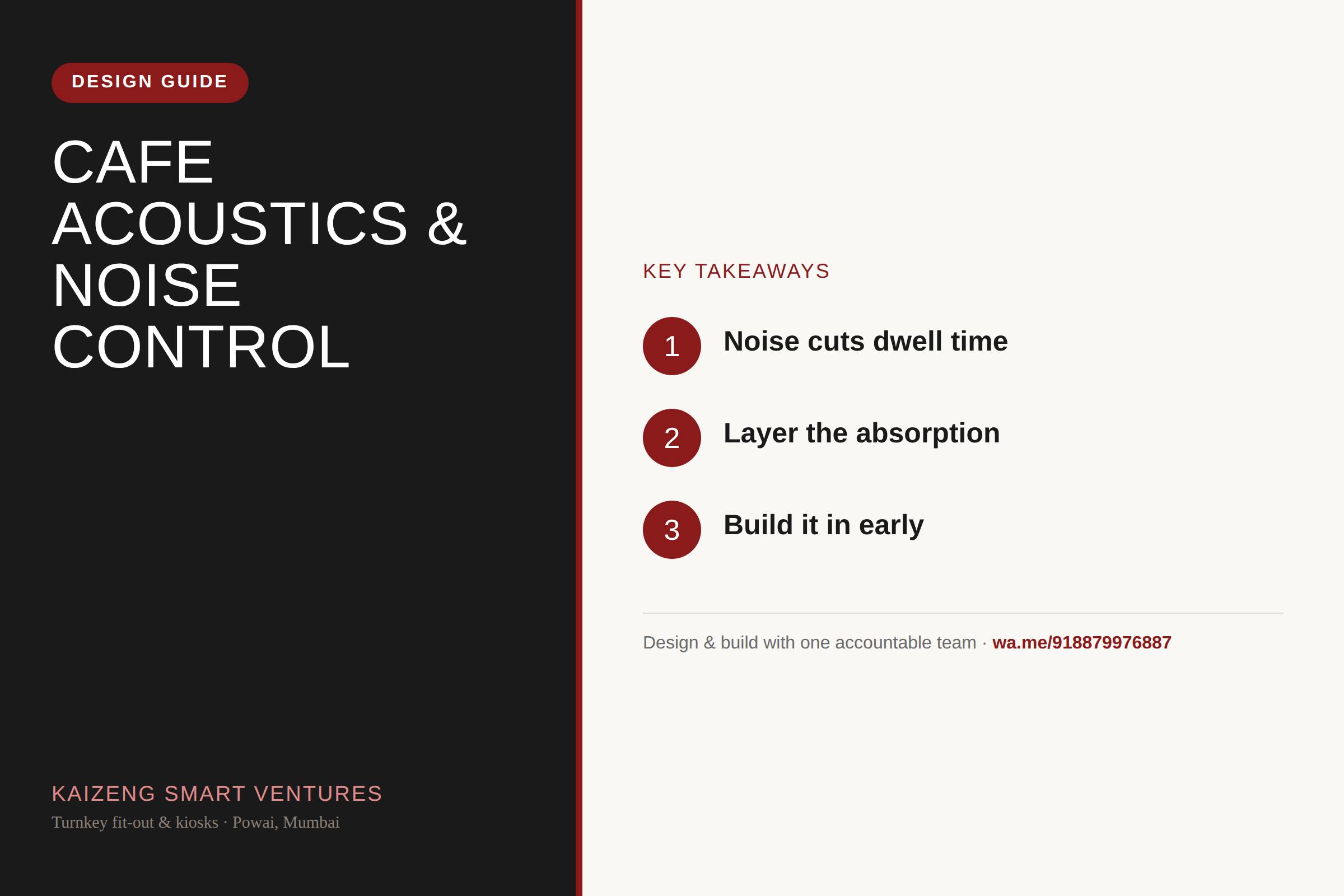
Control cafe noise by spreading sound absorbing surfaces across the whole room, acoustic ceiling rafts, fabric panels, upholstered seating and planting, and by zoning noisy equipment away from the seats meant for lingering. A good acoustic plan is not about silence, it controls reflections so conversation feels easy and the room feels calm.
Walk into a cafe that feels loud and you leave sooner, order less and rarely return. Noise is one of the most under budgeted parts of a fit-out, yet it quietly decides how long guests stay and how much they spend. A good acoustic plan is not about silence. It is about controlling reflections so conversation feels easy and the room feels calm. This guide explains why sound matters, what actually absorbs it and how to design it in from day one.
Why does noise quietly kill dwell time?
Cafes are hard rooms. Glass, concrete, tile and timber all bounce sound. Add an espresso machine, a grinder, background music and forty people talking, and the space climbs to a level where everyone raises their voice to be heard. That feedback loop is called the Lombard effect, and it is why a busy cafe can feel exhausting within minutes.
When a room tires people out, they finish quickly and go. Shorter dwell time means fewer second coffees, fewer desserts and lower average bills. For any operator watching per seat revenue, acoustics is a commercial lever, not a design luxury.
Which materials actually absorb sound?
Soft, porous and layered surfaces soak up sound. Hard, flat and reflective ones return it. A workable cafe scheme mixes several of the following rather than relying on one fix.
- Acoustic ceiling rafts or baffles above the noisiest zones
- Fabric wrapped wall panels, felt tiles or perforated timber with backing
- Upholstered banquettes and cushioned seating instead of all hard chairs
- Heavy curtains, rugs and planting to break up open runs
- Cork, moss panels or textured plaster as decorative absorbers
| Absorber | Role in the room |
|---|---|
| Acoustic ceiling rafts or baffles | Placed above the noisiest zones. |
| Fabric wrapped wall panels, felt tiles or perforated timber with backing | Wall mounted absorption. |
| Upholstered banquettes and cushioned seating | Used instead of all hard chairs. |
| Heavy curtains, rugs and planting | Break up open runs. |
| Cork, moss panels or textured plaster | Act as decorative absorbers. |
The trick is coverage across the room, not a single feature wall. Sound does not care how pretty one panel looks if every other surface is bouncing it back.
How should you use layout and zoning?
Where you put things matters as much as what they are made of. Keep the grinder, blender and till away from the seats meant for lingering. Create a natural buffer between the noisy service counter and a quiet back corner. Booths and partial partitions give guests a sense of enclosure without closing the space off.
Zoning also lets you serve different crowds at once. A lively front near the window suits quick catch-ups, while a softer rear suits laptop workers and long chats. If a large share of your guests come to work, treat that zone the way you would treat a focus room. Our office pods and acoustic workspaces work uses the same principles of containment and absorption that a work-friendly cafe corner needs.
What about the ceiling, the surface everyone forgets?
The ceiling is the largest uninterrupted surface in most cafes and the one most often left bare. An exposed industrial ceiling looks great and reflects sound straight down onto diners. You do not have to hide it. Suspended rafts, spaced baffles or a cloud of panels over the main seating can cut reverberation dramatically while keeping the raw look. Because the ceiling is out of reach, it also stays cleaner and undamaged, so the investment lasts.
Why build acoustics in early, not later?
Retrofitting acoustics after opening is expensive and disruptive. Panels bolted on as an afterthought rarely match the interior and often underperform. Planning absorption alongside lighting, seating and services means it disappears into the design and does the job quietly. This is where a single accountable team helps. At Kaizeng Smart Ventures we deliver turnkey interior fit-out execution against a locked BOQ, so acoustic treatment is costed and installed as part of the build rather than bolted on later. We work with cafe and coffee operators who want a room that sounds as good as it looks.
Common questions
Q: Will acoustic treatment make my cafe feel dead or too quiet? No. The goal is a balanced room where conversation carries clearly at a comfortable level. Good treatment removes the harsh echo, not the life and buzz of the space.
Q: How much of the fit-out budget should go to acoustics? It varies by shell and finishes, but treating it as a planned line item from the start is far cheaper than retrofitting. Indicatively, a modest share dedicated early avoids much larger corrective spend later.
Q: Can I fix a noisy cafe that is already open? Yes, though it is harder. Adding ceiling rafts, wall panels, softer seating and planting can bring a loud room back under control, ideally guided by a proper assessment of where the reflections come from.
Design a cafe that sounds right
Acoustics is one of the highest return decisions in a cafe fit-out and one of the easiest to skip. If you are planning a new space or fixing a loud one, talk to us early. See how we approach building a cosy cafe, or message us on WhatsApp and visit our contact page to start a conversation about your room.
