
Biophilic Cafe Design: Bringing Green Indoors
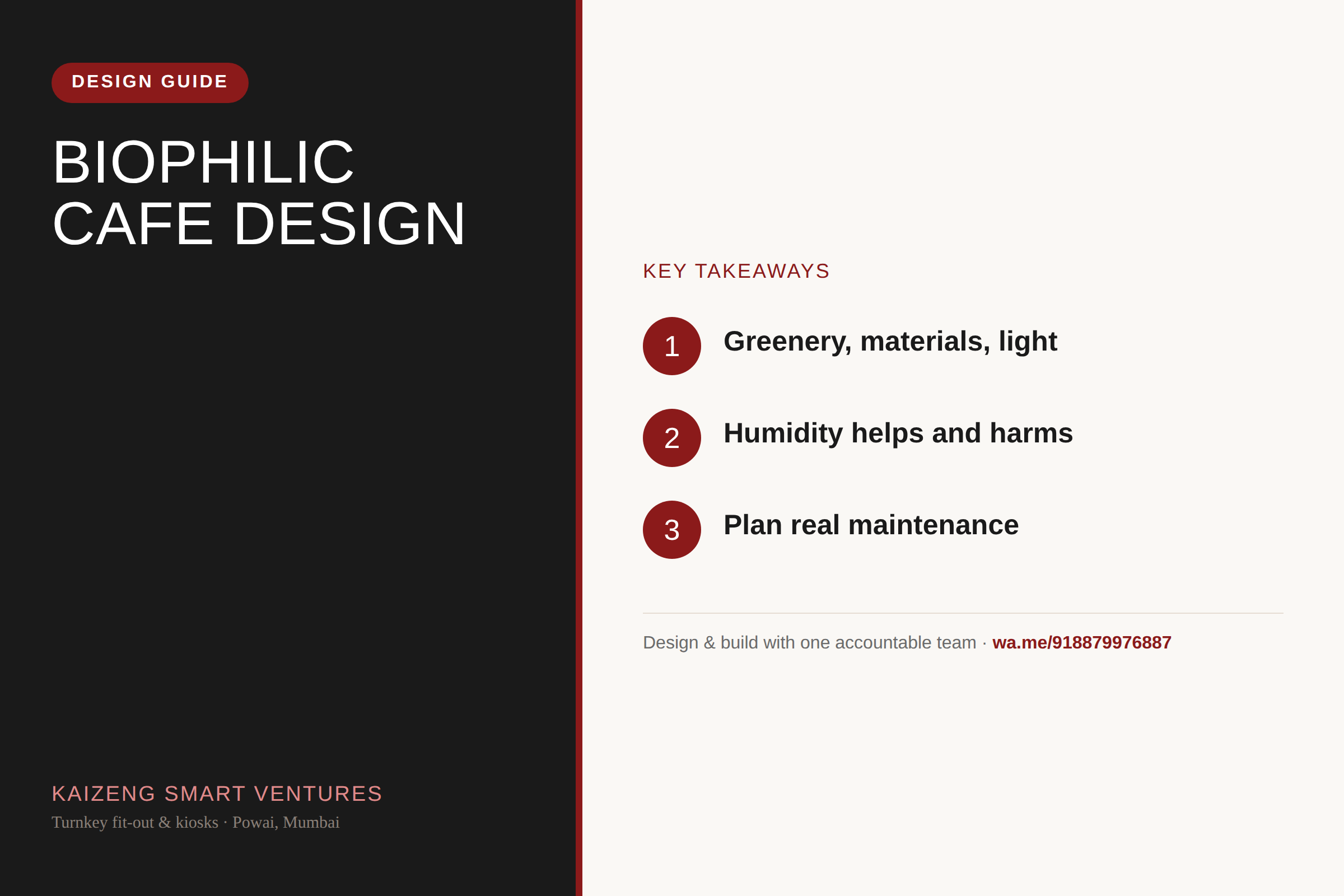
Biophilic cafe design connects a space with nature through living greenery, natural materials such as wood, stone, cane and clay, generous natural light, and organic shapes with an earthy colour palette. Done well it keeps guests lingering, and in a humid city like Mumbai it works best when plants, materials, light and maintenance are planned together from day one.
Biophilic design is the simple idea that people feel better around nature, and it has become one of the most popular directions in cafe interiors. Bring the outdoors in with plants, natural light and honest materials, and a room instantly feels calmer, fresher and more welcoming. Done well it photographs beautifully and keeps guests lingering. Done carelessly it becomes a graveyard of dying pots. Here is how to get the good version, especially in a humid city like Mumbai.
What does biophilic design actually mean?
Biophilic design is more than scattering a few plants around. It is a deliberate effort to connect the space with nature through several senses at once. The main ingredients work together.
- Living greenery, from potted plants to a full green wall.
- Natural materials such as wood, stone, cane and clay.
- Generous natural light and views out where possible.
- Organic shapes, textures and an earthy colour palette.
When these elements combine, the effect is far greater than any one of them alone. We weave this thinking into cafe projects through our interior fit out execution work.
| Biophilic element | Examples from this guide |
|---|---|
| Living greenery | Potted plants through to a full green wall |
| Natural materials | Wood, stone, cane and clay |
| Natural light | Generous daylight and views out where possible |
| Organic design | Organic shapes, textures and an earthy colour palette |
Which plants earn their place in a cafe?
The secret to a green cafe that stays green is choosing the right plants for the conditions and the upkeep you can realistically manage. Match each plant to how much light that corner actually gets, and be honest about who will water them. A mix of hardy, low maintenance species in bright spots and a few statement plants where they get attention beats a jungle you cannot sustain. Group plants at different heights for a natural look, and keep them away from hot equipment. If genuine upkeep worries you, a smaller number of thriving plants always looks better than a large number of struggling ones.
How do natural materials and light work together?
Greenery is only half of biophilic design. The materials carry just as much weight. Timber counters, cane furniture, stone tops and clay or lime finishes bring warmth and texture that plastic laminates never will. Pair them with as much natural light as the space allows, because daylight makes both the plants and the materials come alive. Where windows are limited, warm lighting and plenty of texture keep the mood soft. This material led warmth also shows up in our how to build a cosy cafe guide, since biophilic and cosy share a lot of DNA.
How does Mumbai humidity affect a biophilic cafe?
Mumbai has a real advantage for biophilic cafes: the humid climate means many tropical plants thrive with little effort. But that same humidity has a flip side for materials. Untreated timber can warp, and poorly ventilated corners can grow mould behind planters. The answer is to plan for it. Use properly treated and sealed wood, ensure air moves around planted areas, choose finishes that tolerate moisture, and add drainage or waterproofing where plants sit against walls or floors. Plan the greenery into the services and construction from the start, not as a decoration added at the end. This kind of climate aware detailing is exactly what a cafe interior designer in Mumbai should be handling for you.
How do you keep maintenance realistic?
The most beautiful biophilic cafe fails if nobody can look after it. Before you commit to a lush scheme, decide who waters, trims and replaces plants, and how often. Build in easy access to every planter, consider self watering pots for hard to reach spots, and keep a small budget for seasonal replacement. Treating the greenery as a living part of the operation, with a real routine, is what separates a cafe that stays gorgeous from one that looks tired within months. For a cafe and coffee brand, that consistency protects the very image the plants were meant to create.
What do people most often ask about biophilic cafe design?
Q: Is biophilic design high maintenance? It can be, but it does not have to be. Choose plants suited to each spot, plan easy access for watering, and start with a manageable number. Good selection keeps upkeep reasonable.
Q: Will plants survive in a cafe with little natural light? Some will. There are hardy species that tolerate low light, and you can supplement with suitable grow lighting. Match every plant to the light its corner actually receives.
Q: Does Mumbai humidity help or hurt? Both. It helps many plants flourish, but it can damage untreated materials and cause mould if corners are poorly ventilated. Plan sealed finishes and airflow from the start.
Ready to bring the green in?
Biophilic design looks effortless only when the plants, materials, light and maintenance are planned together from day one. If you want a green cafe that stays healthy in Mumbai conditions, talk to our team through our cafe interior design in Mumbai service or message us on WhatsApp. One accountable team, one locked bill of quantities, from plan to handover.
