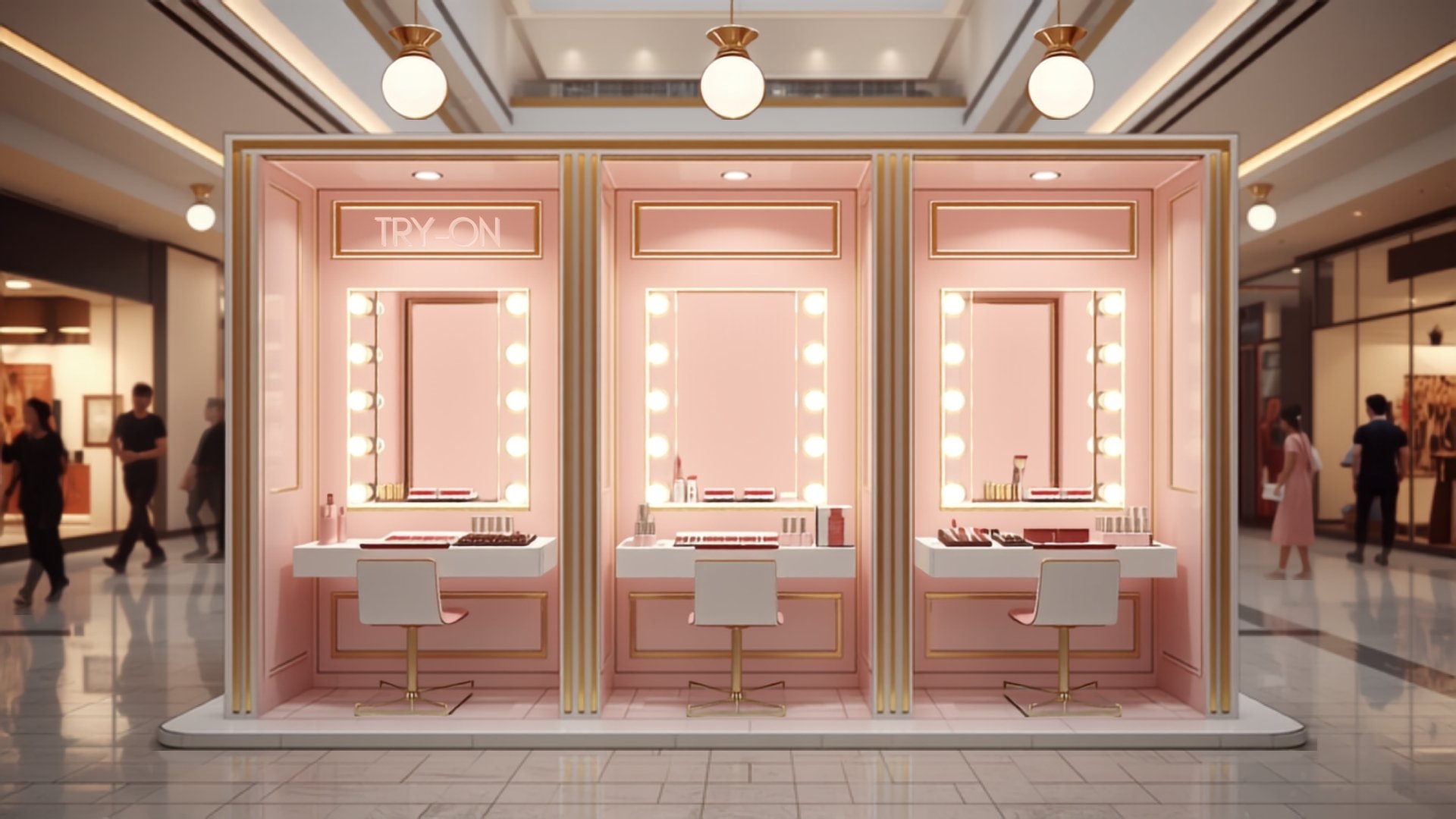
An experiential beauty island with Hollywood-mirror lighting, hygiene stations and shade-matching displays, built for conversion rather than display.
Get a Custom QuoteThe Cosmetics Try-On Bar is an experiential beauty island built for premium mall atriums, designed for beauty brands, D2C cosmetics labels moving offline, and multi-brand beauty retailers adding high-visibility touchpoints.
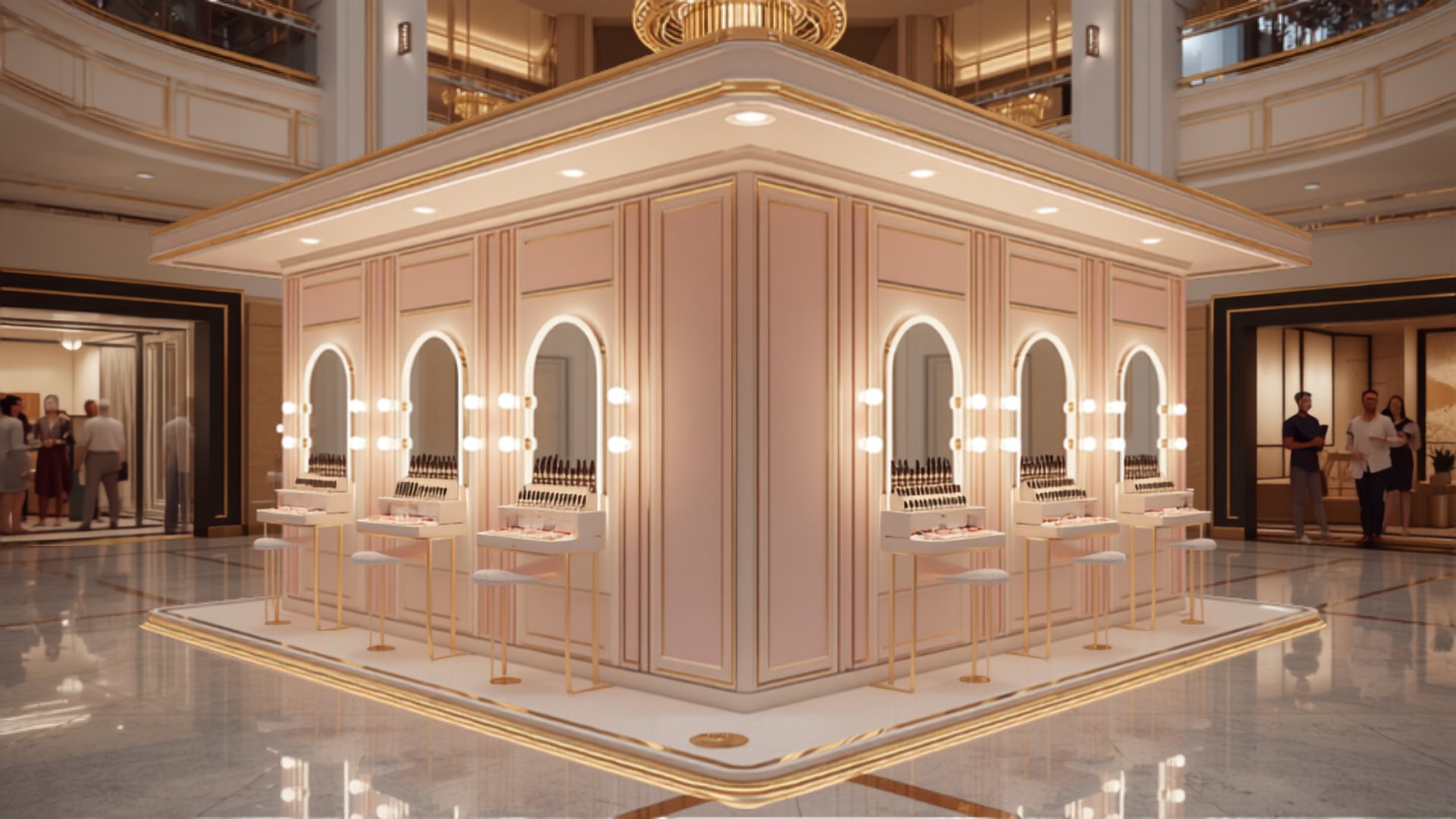
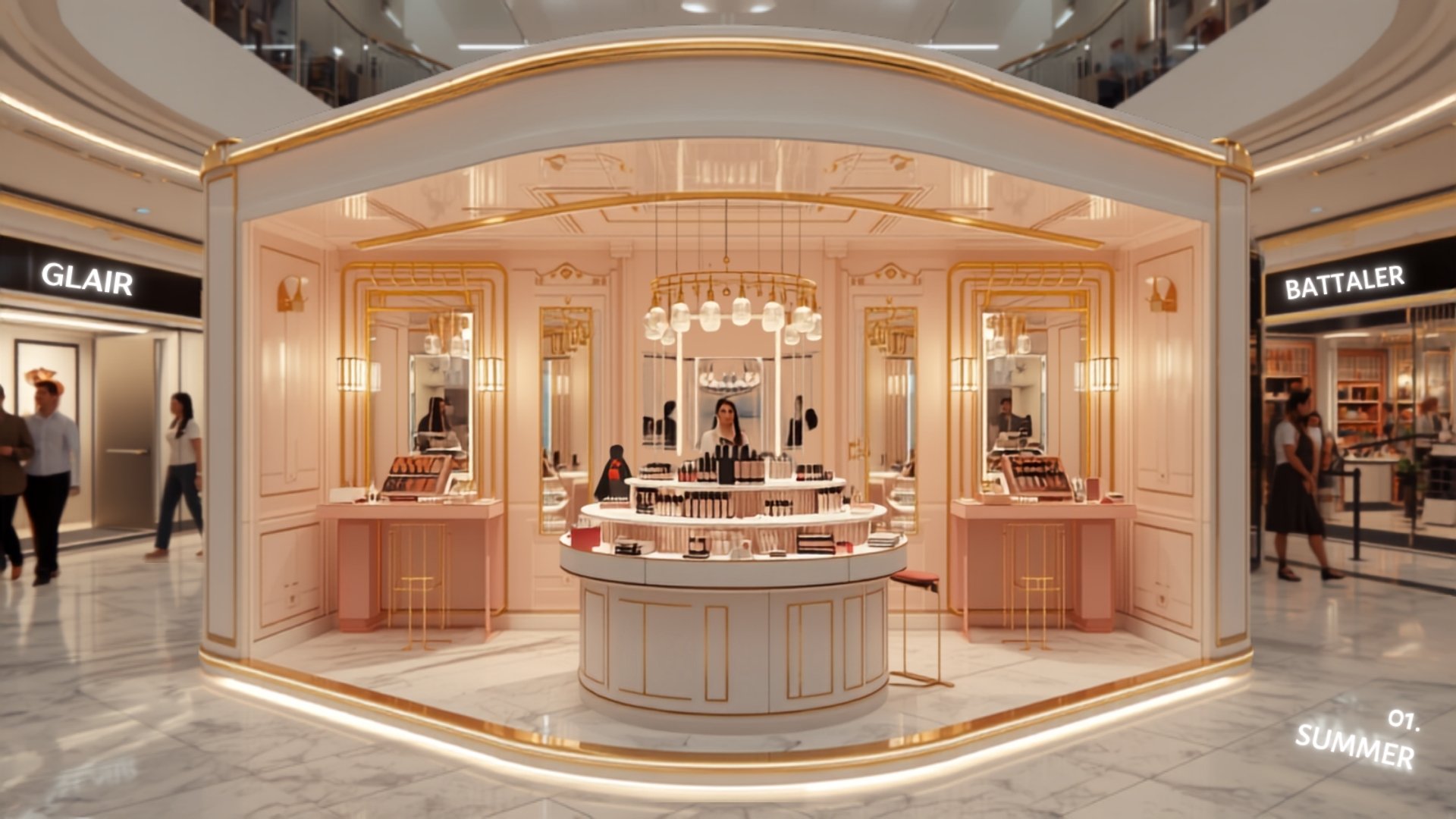
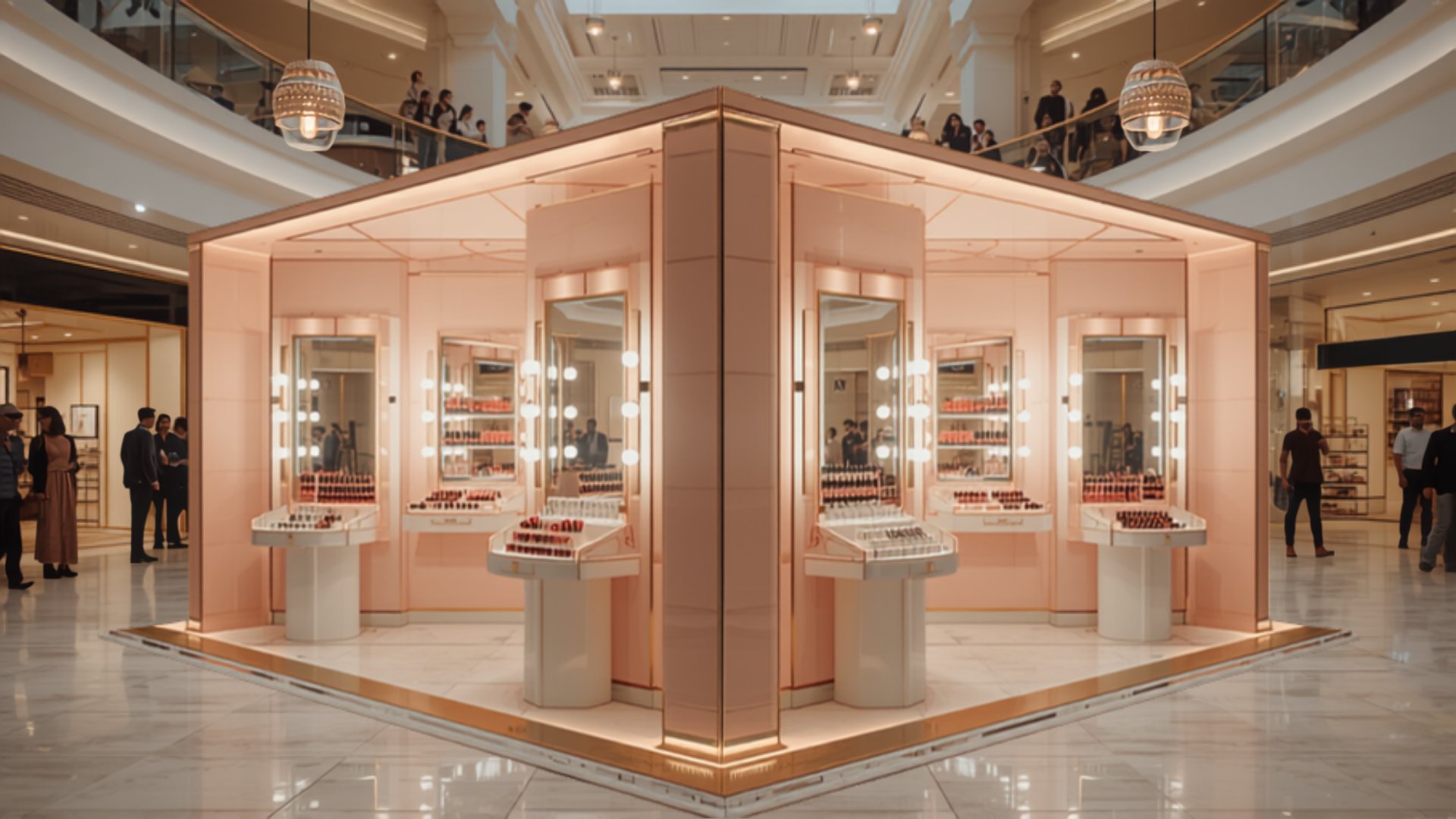
Beauty is a shade-and-skin category: the purchase decision happens in the mirror, not on the shelf. This kiosk is engineered around that moment. Hollywood-style illuminated mirrors deliver the flattering, true-tone light that converts try-ons into purchases, tiered displays put testers forward by category, and a visible hygiene station turns sanitization into a trust signal. The whole island, structure, mirror lighting systems, displays, and finishes, is manufactured at our Mumbai facility in 15 to 18 working days and installed in one night.
Beauty retail lives or dies on light quality. The design uses high-CRI warm-neutral lamps at the mirrors so skin tones read true, the difference between a try-on that converts and one that doesn't.
Looking to build something for your brand?
Click here for details & pricing →Try-on is beauty's conversion engine. Cosmetics conversion multiplies when a customer sees a shade on their own skin under flattering light. The kiosk is built around that single moment, mirror, lighting, and tester within one motion of each other.
The D2C beauty wave needs offline trial. India's digital-first beauty brands hit a ceiling where shade uncertainty caps online conversion. A try-on bar in a mall atrium converts scrollers into first-purchase customers at a fraction of a store's cost.
Small products, big display density. Beauty SKUs are tiny. An 80 sq ft island carries a full range with tester duplicates and stock, no back room required.
Hygiene is now a brand signal. A visible, designed sanitization station is trust-building merchandising as much as compliance.
Planning a multi-unit rollout? Talk to us.
WhatsApp us →What does a cosmetics kiosk cost in India?
The Cosmetics Try-On Bar sits in the ₹6 to 12 lakh band depending on station count, display formats, and finishes.
How is tester hygiene handled?
A designed sanitization station with disposable applicators is built into the layout, and tester displays use easy-clean surfaces. Hygiene is treated as visible merchandising.
Can this work for a D2C beauty brand's first offline presence?
Yes. That is a core use case. Add QR-to-purchase integration and the kiosk becomes an offline trial engine feeding your online store.
How long does it take?
15 to 18 working days of manufacturing, one overnight installation.
Can it be moved between malls?
Yes. The modular structure disassembles and reinstalls at a new location, typically within two days.
Case studies from our execution portfolio relevant to this kiosk format.
Every kiosk is fabricated end-to-end at our Mumbai facility — MS, SS 304 and aluminium fabrication, laser cutting, powder coating, large-scale carpentry, and signage under one roof. Prefabricated off-site, quality-checked, and installed overnight.
Multi-location rollouts, flat-pack engineering, container-fit design, and export documentation support. One approved design, manufactured repeatedly to a locked specification.
Bulk & Export EnquiryShare your requirement and our team responds within one working day with a spec-and-budget conversation — no obligation.