
Uber Airport Pickup Zone Lounge | Mumbai International Airport (T2)

Create a streamlined solution and work with it to design evolve.
Uber gave us a live international airport, a 60 day clock, and a pickup zone that did not have a blueprint yet. We handed it back in 45, without a single day of disruption to the terminal.
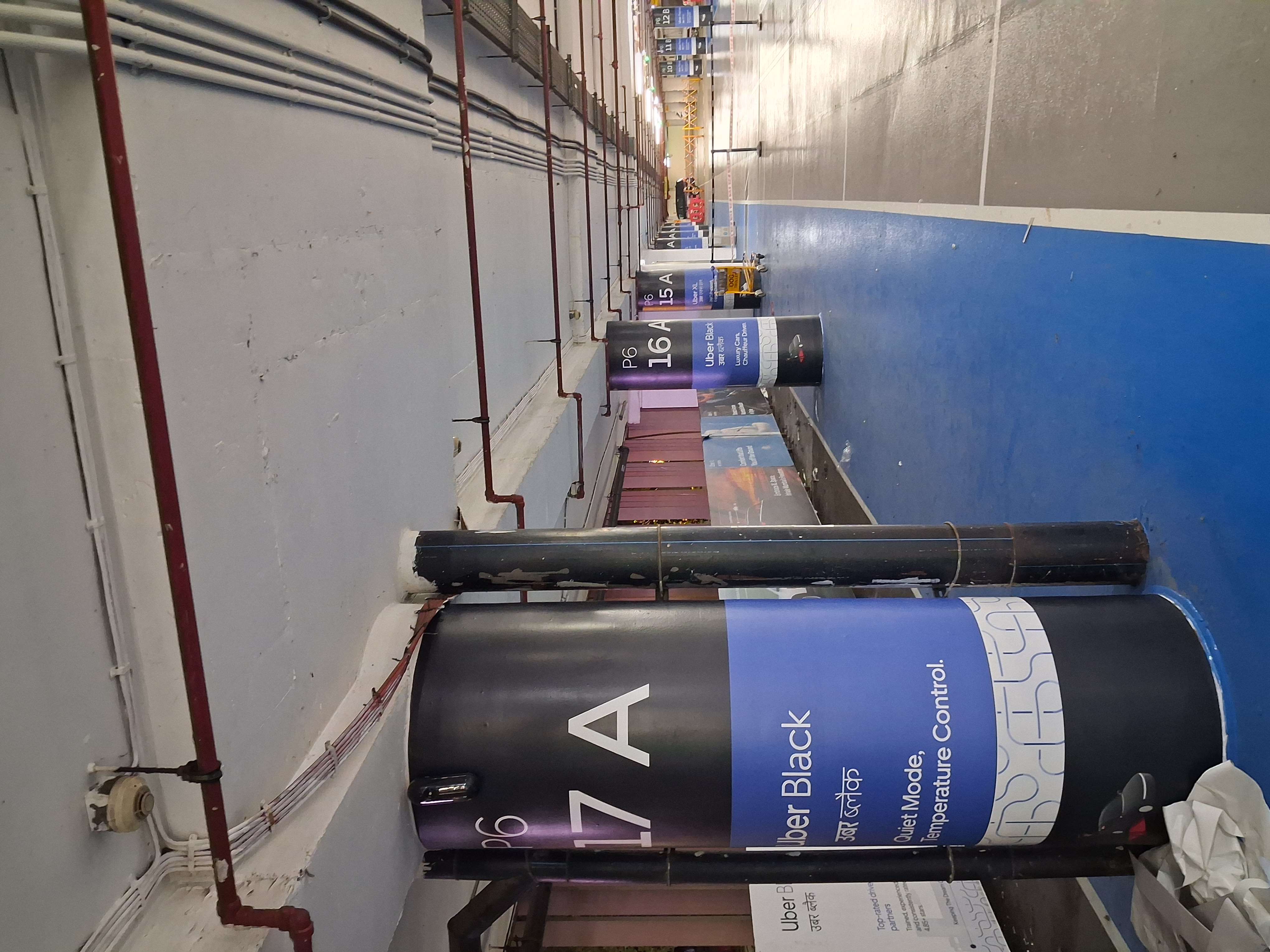
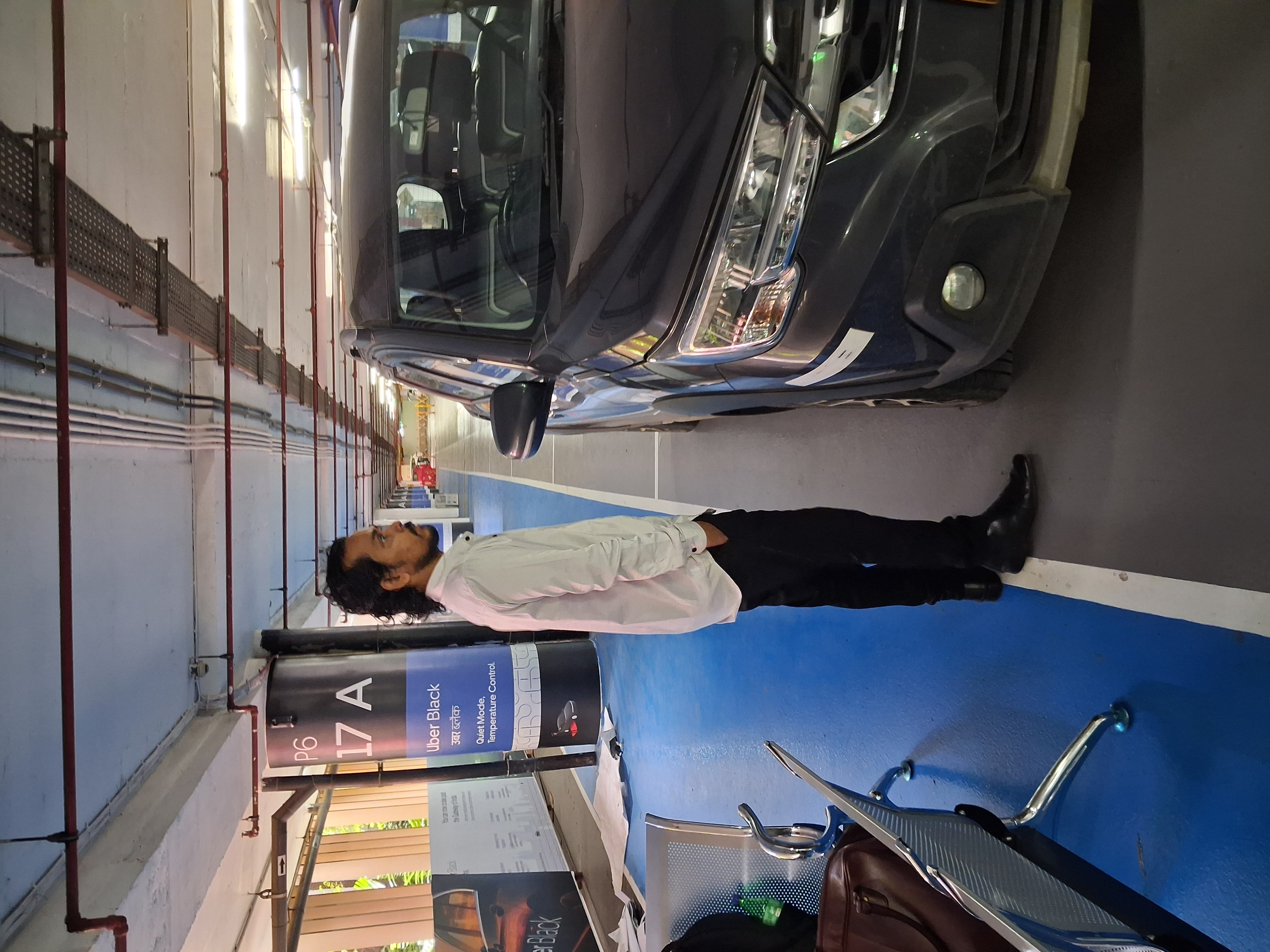
This was Uber's entire P6 pickup and passenger lounge zone at Mumbai T2, tied to a product rollout and leadership visibility. It had to be fast, compliant, and unmistakably Uber, all inside a terminal that never stops moving.
Why an airport is the hardest place to build anything
A normal fit-out gives you a site you control. An airport gives you the opposite. The terminal is live the entire time you are working in it, so every material that comes in and every trade that shows up runs on the airport's schedule, not yours. Timed access windows, security clearance, controlled entry for everything.
The brief was just as open. There was no ready made pickup-zone blueprint for a footfall like Mumbai T2's. The scope had to be built from the on-ground reality, the pickup stations, vehicle staging, electrical, wayfinding, civil works, the lounge, and every branded passenger-facing element, rather than handed down as a finished plan. The launch date left no room for slow design cycles or a second attempt at anything.
.png)
.jpg)



The Challenge
How do you start when there is no blueprint?
Before we touched the site, we turned the ambiguity into something you could actually execute. We reframed the requirement into defined zones, passenger movement logic, vehicle staging, lounge planning, wayfinding, and branding scope, so every workstream knew exactly what it owned and could move without waiting on the others.
Then we front-loaded the parts that quietly kill airport projects. Approvals, material specifications, method statements, safety clearances, sample sign-offs, and the BOQ were locked before on-site work intensified. That is the unglamorous discipline that stops a project from stalling at a security gate three weeks in. Decide early, so the site never waits on a decision.
Running six trades at once, without tripping over each other
With the plan frozen and approvals in hand, we could do the thing a fixed timeline demands, run in parallel. Civil works, painting, electrical rough-ins, fabrication, finishing, wayfinding, and branding deployment were sequenced to move at the same time rather than one after another, without giving up finish quality, safety, or compliance to do it.
.png)
What we delivered
- Civil and structural works across the full pickup zone
- Flooring, painting, and structural installation support
- Electrical distribution, lighting, and service integration
- Passenger lounge build elements and related infrastructure
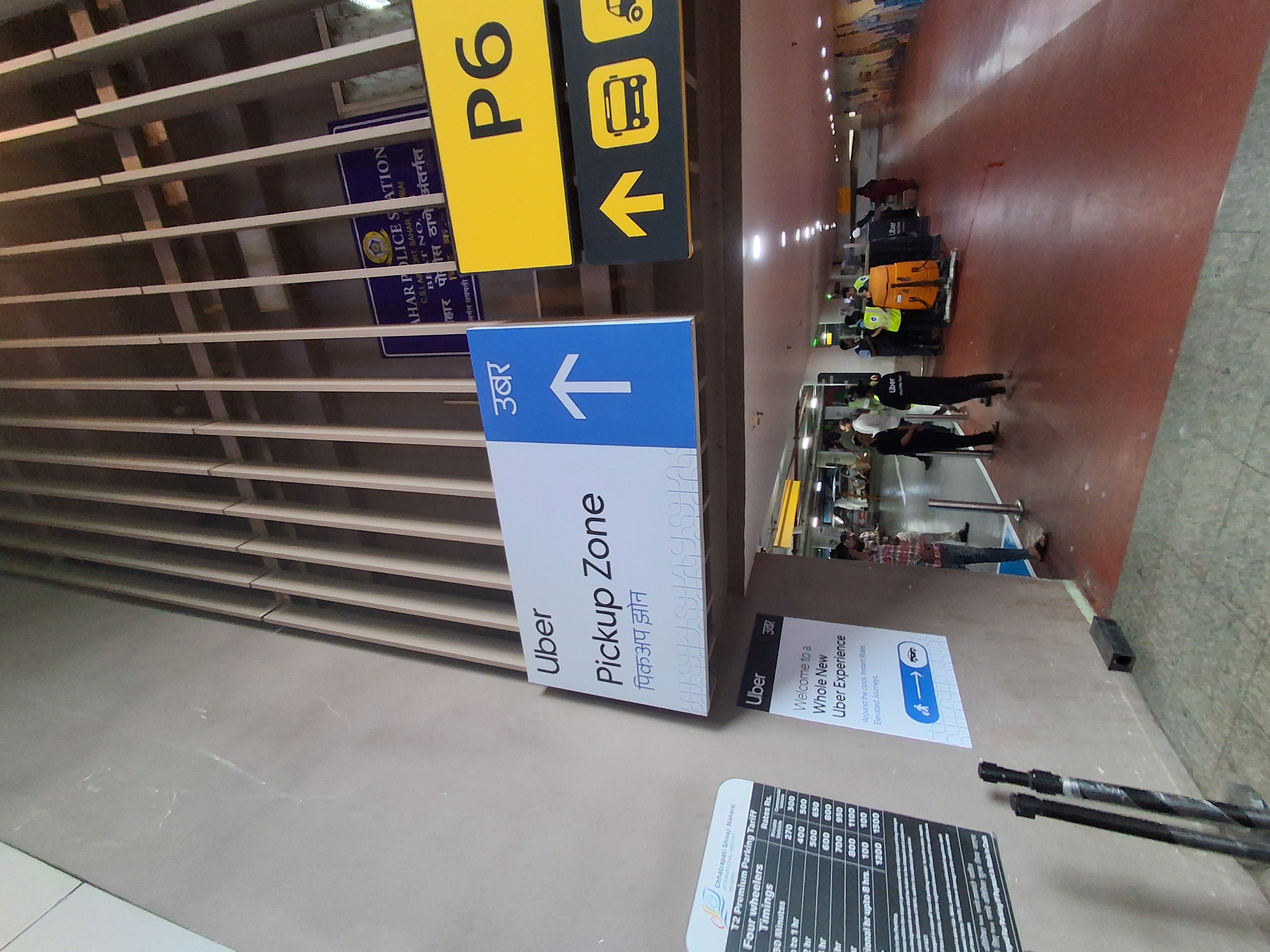
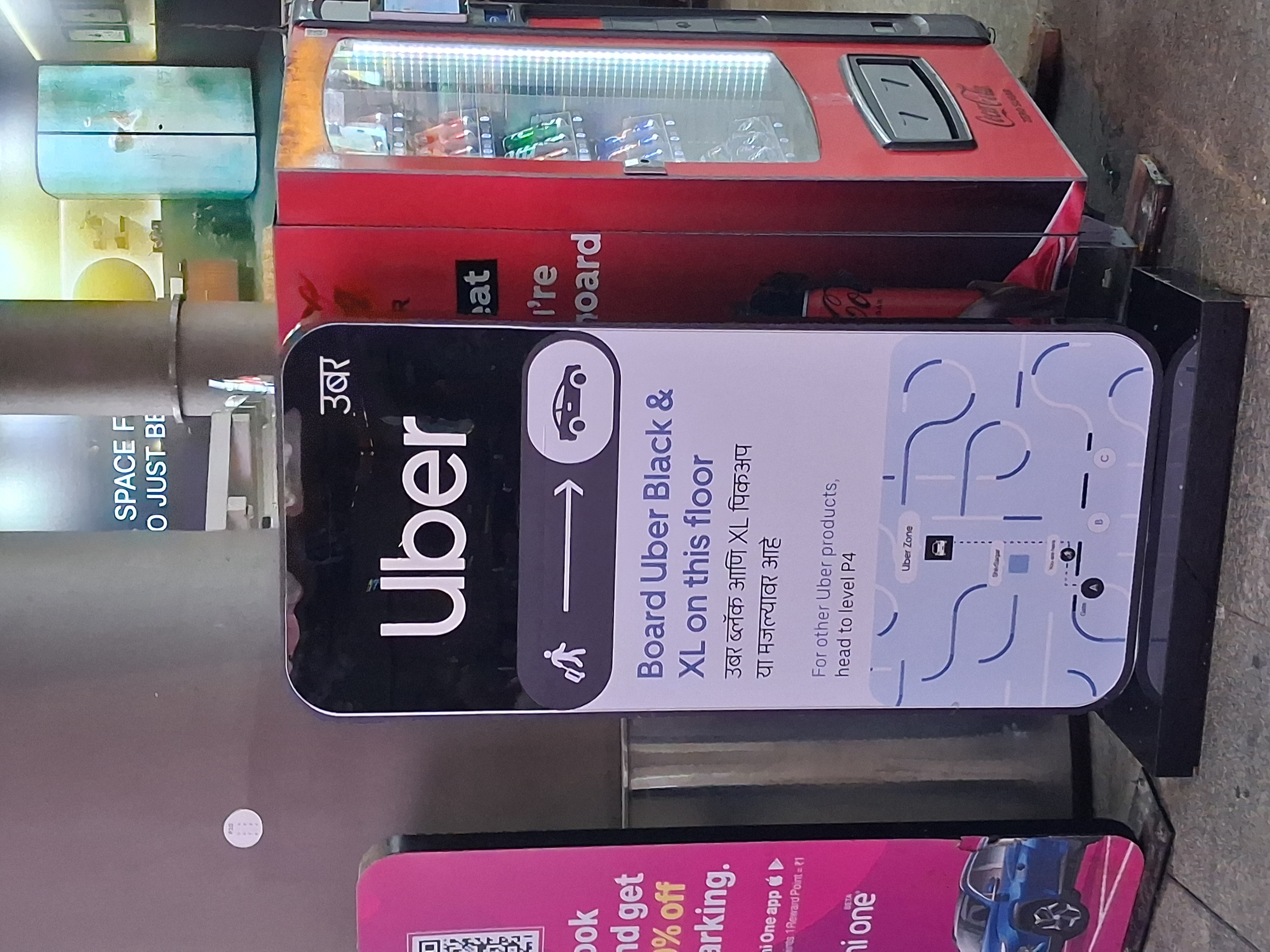
- Signage, wayfinding systems, and branded graphic deployment
- Documentation, BOQs, vendor details, and full handover support
The 45 days, week by week
- Day 1 to 3: Airport survey, operational mapping, and scope freeze
- Day 4 to 10: Layout finalisation, approvals routing, and BOQ lock
- Day 11 to 25: Civil works, P6 painting, and phased electrical rough-ins
- Day 26 to 35: Lounge build, structural supports, and finishing
- Day 36 to 42: Wayfinding, retro-reflective graphics, and branding deployment
- Day 43 to 45: Testing, snag closure, and handover readiness
What Uber got at the end
The zone was delivered in 45 days against a planned 60. Because scope was defined early and approvals were done upfront, that speed came without the rework and budget drift that usually pays for it. The finished environment gave passengers clearer movement, stronger branded wayfinding, and a space Uber could point to and repeat.
Most of all, it became a model. What we built at T2 is the same playbook we then ran for Uber at Pune, Kolkata, and Navi Mumbai, a way to deliver inside a live airport, on a fixed clock, that scales from one terminal to a national rollout.
Common questions
How long did the Uber Mumbai T2 pickup zone take to build?
45 days, against a planned 60 day timeline, delivered inside a live international airport terminal with zero disruption to operations.
How do you build inside a live airport without disrupting operations?
By front-loading approvals, method statements, safety clearances and the BOQ before site work starts, then running trades in parallel within the airport's timed, security-controlled access windows.
What was included in the project scope?
Civil and structural works, electrical distribution and lighting, the passenger lounge build, signage and wayfinding, branded graphics, and full documentation and handover support across the P6 pickup zone.
Can Kaizeng deliver airport projects in other cities?
Yes. The same model was delivered for Uber at Pune, Kolkata and Navi Mumbai airports, plus branding across 14+ cities.
Get the sample site reconnaissance report
The 8-page anonymised report from this Bandra West unit: the scoring matrix, the 34-point walk, annotated photos and the verdict. Tell us where to send it and the download opens right away.
Something went wrong. Message us on WhatsApp at +91 88799 76887 and we will send it by hand.
Planning a project like this?